
Yongda Yongda

China Top 10 Segmented Ball Valve Manufacturers?

Time:2026-10-19 Author:Isabella
0%

Choosing a reliable Segmented Ball Valve manufacturer in China requires more than comparing product photos or advertised prices. This guide introduces ten notable suppliers for industrial flow-control applications, including water treatment, chemical processing, power generation, and mining. Each company is examined through practical criteria: valve design, material selection, pressure performance, actuator compatibility, testing procedures, delivery capability, and after-sales support.

A dependable manufacturer should explain its engineering decisions clearly. Look for documented ISO systems, traceable materials, pressure-test records, and inspection reports that match the project specification. Factory experience also matters. A well-machined ball, accurate seat geometry, and stable coating quality can influence shutoff performance in demanding pipelines. Small details matter.

The selected companies may serve different markets and project sizes. Some focus on customized control valves, while others offer standardized products for faster delivery. Their strengths are not identical, and the ranking should not be treated as absolute. Local service, export experience, communication quality, and technical response times can change the best choice for each buyer.

There is no perfect supplier.

Buyers should verify current certificates, production capacity, references, and warranty terms before placing an order. Site audits or third-party inspections may reveal practical differences that catalogs cannot show. This overview aims to support informed comparison, not replace professional engineering review. It also recognizes an important limitation: public information can be incomplete, outdated, or presented unevenly. Careful verification remains essential when selecting a China-based Segmented Ball Valve manufacturer for critical service.
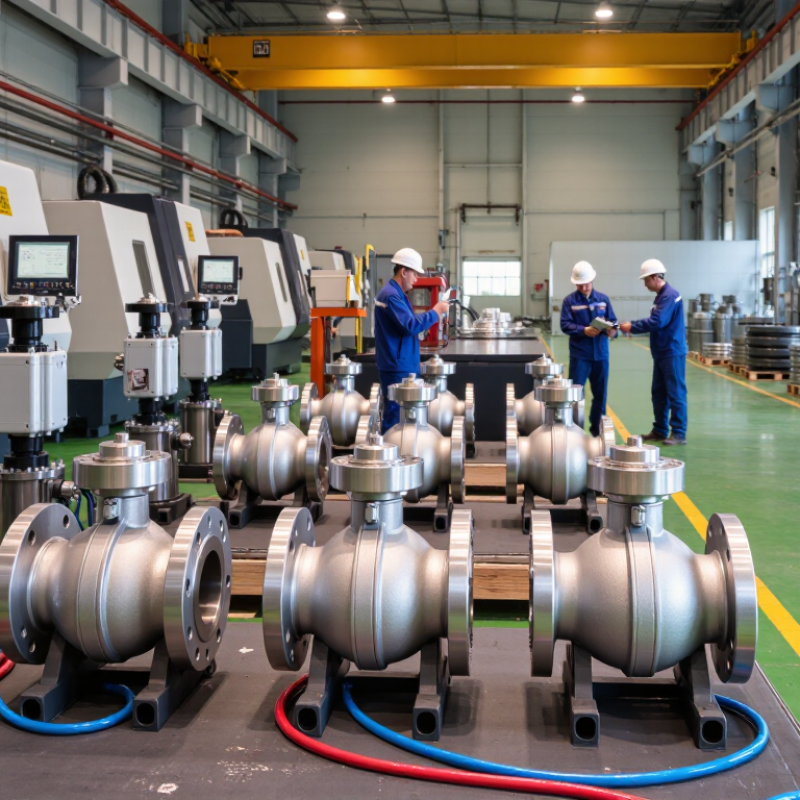
China Top 10 Segmented Ball Valve Manufacturers?

What Are Segmented Ball Valves and How Do They Work?

What Are Segmented Ball Valves and How Do They Work?

A segmented ball valve uses a partly spherical disc with a V-shaped opening. Unlike a full-port ball valve, its curved segment controls flow more gradually. When the stem rotates, the opening moves from closed to fully open within roughly 90 degrees. An actuator can position the stem precisely, allowing the valve to regulate liquid, gas, steam, and abrasive mixtures.

The V-shaped edge creates a shearing action near the seat. This feature helps manage fibrous fluids, slurry, and fluids containing suspended particles. In operation, flow enters the valve and passes through the changing opening. The smaller the opening, the higher the velocity and pressure drop. Engineers must check cavitation, noise, flashing, and erosion before selecting a trim or seat material.

Practical inspection matters. I would verify the body rating, shaft alignment, actuator torque, and shutoff direction before installation. A misaligned actuator can leave the valve partly open, even when the control signal appears correct. The phrase “self-cleaning” is useful, but it is not absolute. Sticky media can still build deposits around the seat. In China’s valve manufacturing sector, reliable production should include pressure testing, leakage testing, material traceability, and documented dimensional checks. Operators should also confirm the valve’s temperature range and control response under actual process conditions, not only on a data sheet.

Key Criteria for Evaluating Chinese Valve Manufacturers

Selecting a segmented ball valve manufacturer in China requires evidence, not a polished ranking. A 2024 Fortune Business Insights report valued the global industrial valves market at approximately USD 77.5 billion in 2023. Estimates differ. That gap itself deserves scrutiny.

Evaluate engineering depth first. Ask for torque calculations, flow coefficients, pressure-temperature charts, and cycle-test records. Segmented valves often face abrasion, cavitation, or unstable flow. A catalogue rarely shows these risks. Confirm testing against ISO 5208, and request material certificates under EN 10204 3.1. For pipeline applications, API 6D compliance may be relevant. For emissions-sensitive service, ISO 15848 test evidence matters. Certificates alone prove little.

Audit the factory, not only the sales office. Check machining capacity, actuator calibration, welding controls, coating thickness, and serial-number traceability. Review three years of nonconformance data, delivery performance, and complaint closure times. A useful supplier should explain failures without hiding them. Request references from similar pressure classes and media conditions. Then compare sample valves after independent inspection. This costs time. It can prevent a costly field replacement.

Manufacturers should also disclose inspection equipment calibration and subcontracted processes. Some suppliers present impressive quality files but provide weak after-sales engineering. That is a warning. I would score technical documentation, repeatability, spare-part availability, and communication separately. Price still matters, but the cheapest quotation may reflect thinner testing, not better efficiency.

China’s Top 10 Segmented Ball Valve Manufacturers

China’s Top 10 Segmented Ball Valve Manufacturers

China’s segmented ball valve sector is expanding with process automation, energy projects, and water infrastructure. MarketsandMarkets reported that the global industrial valves market reached about USD 78.6 billion in 2023. It also projects continued growth through 2028, supporting stronger demand for accurate control valves.

A practical top-10 assessment should examine more than export volume. Factory experience, casting quality, actuator matching, and documented testing deserve equal attention. Engineers should review flow-characteristic curves, leakage results, and materials certificates. Compliance with IEC 60534, ISO 5208, and ISO 15848 can reveal process discipline. Site audits are valuable. Product brochures are not enough.

The strongest manufacturers usually provide traceable inspection records, pressure testing, and application support for abrasive or corrosive media. Mordor Intelligence identifies China as an important industrial valve production and consumption market, driven by chemical processing, power generation, and municipal investment. However, rankings remain imperfect. Public data often combines ball, butterfly, and control valve categories. A manufacturer with fewer exports may still offer better machining consistency or faster technical support. Buyers should compare five-year failure records, spare-part availability, and actual operating references before selecting from China’s top 10 segmented ball valve manufacturers.

China’s Top 10 Segmented Ball Valve Manufacturers

Rank Anonymous Manufacturer Profile Nominal Size Range Pressure Classes Body & Disc Materials Key Design Features Applicable Standards Typical Lead Time Primary Applications
1 Profile A DN50–DN1200 PN10–PN40
Class 150–300
Carbon steel, stainless steel; 316L or alloy trim options Eccentric segmented disc, replaceable seat, bidirectional shutoff, anti-blowout stem API 609, ASME B16.34, ISO 5211, EN 12516 4–8 weeks Oil & gas, power, chemical processing
2 Profile B DN80–DN1000 PN10–PN25
Class 150
Ductile iron, carbon steel; stainless steel disc options Low-torque quarter-turn design, resilient metal seat, split-body construction API 609, ISO 5752, ISO 5211, EN 593 3–6 weeks Water treatment, HVAC, district energy
3 Profile C DN50–DN800 PN16–PN40
Class 150–300
Carbon steel, CF8M stainless steel; hard-facing available High-cycle operation, abrasion-resistant trim, fire-safe configuration API 607, API 609, ISO 10497, ASME B16.34 5–9 weeks Mineral processing, pulp and paper, chemicals
4 Profile D DN25–DN600 PN10–PN40
Class 150–300
Stainless steel, duplex stainless steel; PTFE and metal seats Compact wafer and lug patterns, anti-static design, adjustable packing API 609, ISO 5211, EN 593, NACE MR0175 options 4–7 weeks Food processing, pharmaceutical, chemical service
5 Profile E DN100–DN1500 PN6–PN25
Class 150
Ductile iron, carbon steel; nickel and stainless trim Large-diameter flow control, replaceable seat ring, high-capacity port EN 593, ISO 5752, ISO 5211, API 609 5–10 weeks Water infrastructure, irrigation, cooling systems
6 Profile F DN50–DN500 PN16–PN40
Class 150–300
Carbon steel, stainless steel; tungsten carbide coating options Severe-service trim, anti-cavitation geometry, optional double packing IEC 60534, API 609, ASME B16.34, ISO 5211 6–10 weeks Power generation, slurry, high-pressure process lines
7 Profile G DN25–DN400 PN10–PN25
Class 150
Stainless steel, carbon steel; PTFE, RPTFE and graphite seats Hygienic surface options, compact actuator mounting, low-emission packing API 609, ISO 5211, EN 593, ISO 15848 options 3–7 weeks Beverage, biotechnology, fine chemicals
8 Profile H DN50–DN700 PN16–PN40
Class 150–300
Carbon steel, stainless steel; alloy steel stem options Fire-safe option, double-offset actuation, lockable manual override API 607, API 609, ISO 10497, ASME B16.34 5–8 weeks Petrochemical, storage terminals, utilities
9 Profile I DN80–DN1000 PN10–PN25
Class 150
Ductile iron, carbon steel; EPDM, NBR and metal seat options Economical control design, corrosion-resistant coating, easy maintenance EN 593, ISO 5752, ISO 5211, API 609 3–6 weeks Municipal water, wastewater, building services
10 Profile J DN25–DN300 PN10–PN40
Class 150–300
Stainless steel, carbon steel; PTFE and graphite sealing systems Compact construction, pneumatic and electric actuator compatibility, modulating service IEC 60534, API 609, ISO 5211, EN 12516 4–8 weeks General industrial process control

Comparing Products, Industries, and Manufacturing Capabilities

China Top 10 Segmented Ball Valve Manufacturers?

Comparing China’s leading segmented ball valve manufacturers requires more than checking export volume. Product fit matters. MarketsandMarkets estimated the global industrial valves market at about USD 79.4 billion in 2024, with growth toward USD 102.2 billion by 2029. This expansion supports demand for valves used in water treatment, mining, pulp and paper, power generation, and process industries. A useful comparison should examine flow range, pressure class, body materials, sealing design, actuation options, and testing systems.

Manufacturing capability separates serious suppliers from assembly-focused workshops. Look for CNC machining, traceable casting sources, helium or shell testing, and documented quality procedures. ISO 5211 actuator mounting is valuable for automation projects. API, ASME, and EN compliance may also matter, depending on the installation country. Some manufacturers offer wafer, lug, and flanged configurations, while others focus on corrosion-resistant alloys or abrasive slurry service. Small details matter, especially seat performance after repeated cycling.

A ranking can mislead.

I would compare the ten candidates by application evidence, not catalog size. The American Water Works Association reports continuing investment in aging water infrastructure, creating demand for reliable isolation and control equipment. Yet water service and high-temperature chemical service need different designs. A valve that performs well in clean water may fail in abrasive ore slurry. Published test records, inspection access, spare-part availability, and field experience should therefore carry more weight than polished brochures. Data from industry reports is useful, but supplier claims still require verification.

How to Choose the Right Segmented Ball Valve Supplier

China’s Top 10 Segmented Ball Valve Manufacturers: How to Choose the Right Supplier

A strong supplier should be judged beyond a polished catalogue. The 2024 MarketsandMarkets Industrial Valves Market report estimates global growth from roughly USD 78 billion in 2024 to over USD 99 billion by 2029. This expansion increases supplier choices, but also increases quality risks. Build a shortlist of ten Chinese manufacturers, then compare valve design, testing records, and export experience.

Ask for material certificates, pressure-test reports, and drawings showing the ball, stem, seat, and body construction. For corrosive media, verify alloy selection rather than accepting “stainless steel” as a complete answer. Check compliance with relevant standards, such as API 6D, ASME B16.34, ISO 5211, or ISO 15848 where applicable. A reliable factory should explain its inspection process clearly. It should also provide traceability from heat number to final shipment.

Look closely at practical details. Can the supplier produce a 24-inch valve with stable torque data? Are spare seats available within weeks, not months? Request a sample inspection or independent third-party test. One uncomfortable truth: a low quotation may hide weaker coatings, inconsistent machining, or limited after-sales support. I have seen attractive specifications fail during commissioning because operating conditions were incomplete. Share pressure, temperature, medium, cycle frequency, and installation environment before comparing prices. Supplier selection should reward evidence, not confident promises.

China Top 10 Segmented Ball Valve Manufacturers? How to Choose the Right Segmented Ball Valve Supplier

This supplier-selection model uses practical procurement priorities for industrial segmented ball valves. The percentages represent evaluation weights rather than company rankings or market-share data. Technical compliance, quality control, pressure-temperature capability, and traceability should normally receive the greatest attention.

FAQS

What is a segmented ball valve?

It uses a partly spherical disc with a V-shaped opening. The curved segment regulates flow gradually. It is not a full-port design.

How does a segmented ball valve control flow?

A stem rotates the disc through roughly 90 degrees. The opening changes size as the disc turns. A smaller opening usually increases velocity and pressure drop.

Which media can segmented ball valves handle?

They can regulate liquids, gases, steam, and abrasive mixtures. The V-shaped edge creates a shearing action near the seat. This helps with slurry and fibrous fluids.

Why is the V-shaped opening useful?

It helps cut through suspended particles and fibrous material. The design can reduce clogging during normal operation. Still, sticky media may leave deposits.

What problems should engineers check before selection?

Check cavitation, noise, flashing, erosion, and pressure drop. Seat and trim materials need careful selection. The best-looking specification may still fail in service.

What should be inspected before installation?

Verify the body rating, shaft alignment, actuator torque, and shutoff direction. Confirm the temperature range and control response. Small alignment errors matter.

Is a segmented ball valve completely self-cleaning?

No. Its shearing action can help remove buildup near the seat. Sticky fluids may still create deposits. That claim needs practical verification.

How should buyers evaluate a valve supplier?

Request material certificates, pressure-test records, drawings, and traceability documents. Check machining quality, spare-seat availability, and testing procedures. Do not compare quotations alone.

What operating information should buyers provide?

Share pressure, temperature, medium, cycle frequency, and installation environment. For larger valves, request stable torque data. I would not rely only on a data sheet.

Conclusion

This article provides a practical guide to understanding the Segmented Ball Valve, including its structure, operating principle, flow-control advantages, and suitability for demanding industrial applications. It explains how the segmented design supports accurate throttling, reliable shutoff, reduced wear, and efficient performance in industries such as chemical processing, power generation, water treatment, and oil and gas.

The article also presents a structured approach to evaluating Chinese valve manufacturers without focusing on any specific brand. Key considerations include engineering expertise, material quality, machining accuracy, pressure and temperature ratings, testing procedures, certifications, customization capabilities, production capacity, delivery reliability, and after-sales support. A comparison of products and manufacturing capabilities helps buyers identify suitable suppliers, while the final section offers practical guidance for matching valve size, lining, actuator type, control requirements, and service conditions with the right manufacturer.

Isabella

Isabella

Isabella is a dedicated marketing professional with a sharp focus on driving brand growth and engagement through strategic content creation. With an extensive background in digital marketing, she combines her passion for storytelling with her keen understanding of industry trends to deliver......