Yongda Yongda

Manifold Companies & Service

Global Hydronic Heating Solutions, Precise Energy Distribution Systems, and Custom OEM Manufacturing Excellence from the Valve Capital of China

The Global Landscape of Manifold Technologies & Fluid Control

The global HVAC landscape is undergoing a massive evolutionary transition toward low-carbon hydronic heating systems. Central to this paradigm shift is the underfloor heating manifold, which acts as the neurological hub of distribution, balancing heat output across complex, multi-zoned architectural structures. Historically, energy distribution relied on crude routing methods, which suffered from significant pressure drops and thermal losses. Modern architectural design demands precision zone regulation, requiring sophisticated manifolds engineered to manage dynamic flow rates, balancing loops, and real-time temperatures.

In North America and Europe, the push for energy efficiency in buildings has accelerated the installation of radiant hydronic floors. As regulatory frameworks mandate stricter building emissions codes, designers are integrating heat pumps with low-temperature distribution networks. Because low-temperature systems require larger surface areas and exceptionally balanced flows to heat environments evenly, high-quality, temperature-controlled brass and stainless steel manifolds have become non-negotiable components of sustainable infrastructure.

Key Technical Paradigms Driving the Industry

Modern fluid control is no longer just about preventing leaks; it is about high-resolution control. Manufacturers are shifting from simple manual control ports to integrated flow meters, differential pressure bypass valves, and automated actuator interfaces. This permits building management systems (BMS) to optimize water loops programmatically. Materials are also shifting toward lead-free alloys and stabilization treatment technologies that minimize electrochemical corrosion within closed-loop heating and cooling circuits.

Hydronic Flow Precision

Dynamic flow meters mounted on loop supply runs display actual GPM/LPM values, enabling quick diagnostic checks and hydronic balancing.

Materials Integrity

Forged CW617N brass and AISI 304/316 grade stainless steels offer superior resistance to dezincification and pitting in closed-loop systems.

Thermal Integration

Direct connectivity to thermoelectric actuators permits centralized zoning through digital programmable ambient wall thermostats.

Market Analysis Snapshot

The demand for intelligent distribution systems has seen an 8.4% CAGR increase in the commercial renovation segment. According to international construction research, buildings utilizing zonal-controlled hydronic heating realize up to a 30% reduction in heating bills over standard forced-air systems.


Procurement Hotzones

  • Germany, UK, & Poland (Heat Pump Integration)
  • USA & Canada (Radiant Snow Melting Systems)
  • Nordic Regions (District Heating Distribution)

Source: Global HVAC Procurement Intelligence, 2024

Yuhuan Yongda Fluid Control Co., Ltd.

A global leader in fluid valve manufacturing, environmental HVAC design, and high-performance distribution units.

Founded in 1996, Yuhuan Yongda Fluid Control Co., Ltd. (formerly known as Yuhuan Yongda plumbing Co., Ltd.) is located in the heart of "China's Valve Capital"—Yuhuan, Zhejiang. As an industry-leading manufacturer, we have committed over two decades to the engineering, development, production, and global delivery of medium-to-high-grade brass valves, custom pipe fittings, and smart HVAC assemblies.

With a state-of-the-art facility covering over 45,000 square meters (with actual usable production area exceeding 80,000 square meters), we maintain an extensive array of advanced machinery, including 80+ specialized machine tools and 600+ advanced manufacturing and testing apparatuses. We supply custom OEM/ODM solutions to over 20 nations, catering directly to rigorous European and North American building requirements.

Through our specialized brand, Cokaren, we pursue the brand ethos "Keep Flowing, Keep Warming", striving to optimize the safety, efficiency, and reliability of water systems inside modern residences.

Yongda Factory Infrastructure
1,996
Founded In
45,000+
Factory Area (Sqm)
600+
Production & Testing Units
20+
Exported Countries
Cokaren Fluid Innovations

Enterprise Governance & Mission

Our business model is built on rigid quality assurance. We operate under three pillars of certification: ISO9001-2015 (Quality Management), ISO14001-2015 (Environmental Management), and ISO45001-2018 (Occupational Health & Safety).

The foundation of our company culture rests upon four key virtues: Struggle, Enterprising, Pragmatic, and Innovative. Under our core operating tenet of "Customer first, Quality based" and our strict quality policy of "Fine work, no leakage", we focus on engineering durable fluid paths. Our products feature zero-leak designs that protect buildings from damage and maintain thermal flow for decades.

The Chinese Manufacturing & Industrial Cluster Advantage

How Yuhuan's specialized ecosystem delivers unbeatable cost efficiency, technological iteration, and rapid lead times.

Selecting a fluid control supplier is a long-term strategic decision. The localization of manufacturing facilities significantly impacts supply chain resilience, cost structures, and product iteration speed. By centering operations in Yuhuan, Zhejiang—the undisputed capital of brass valves and HVAC components in China—Yuhuan Yongda draws on a highly integrated industrial cluster. This physical grouping of raw material smelters, tooling shops, hot forging operations, precision CNC processing centers, and surface plating facilities translates into distinct structural advantages for international purchasers:

1. Vertical Supply Chain Integration

We source high-purity copper and brass extrusions from adjacent suppliers, reducing transportation overheads and assuring rigorous quality checks at the casting and hot-forging phases. Custom parts can be designed and prototyped within days rather than weeks.

2. Advanced Automation Scale

By hosting more than 600 sets of advanced manufacturing and testing devices (including multi-axis rotary transfer machines and automated high-pressure testing booths), we minimize manual variables. This ensures that massive production runs stay uniform, maintaining tight tolerances.

3. Specialized Technical Talent

Yuhuan is home to generations of skilled technicians, hydraulic design engineers, and quality assurance specialists. Our factory engineers configure manifolds to precise operating pressures, optimizing thermal performance for specialized, project-specific requests.

Additionally, this regional efficiency enables us to absorb commodity market fluctuations in copper and nickel prices better than isolated manufacturers. By optimizing production workflows and material utilization, we pass direct price savings to global distributors, mechanical contractors, and OEM brands.

Energy Distribution System: The Smart Heat Hub

A comprehensive diagram of a modern hydronic system's mechanical components, engineering high-efficiency flow control from the primary heat generator to the floor loops.

Hydronic System Layout Map
Dynamic Balancing & Thermal Routing Control

System Integration & Safety Mechanics

Hydronic energy distribution requires balanced interactions between several crucial components. From filtering particulate matter to regulating system pressure, our product lines form a cohesive system that handles water delivery efficiently. If any part of the chain—such as venting air bubbles or mixing back-end inlet water—is compromised, the heat pump or boiler must work harder. This increases system stress, causing premature failure.

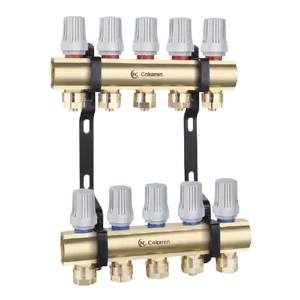
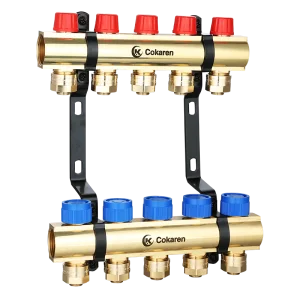
Our engineers designed the Y1001 manifold series to integrate with central boiler systems and underfloor distribution tubing. The manifold regulates loop pressures, handles flow rates, and permits automated room zoning, ensuring that comfortable heating levels are maintained throughout the home.

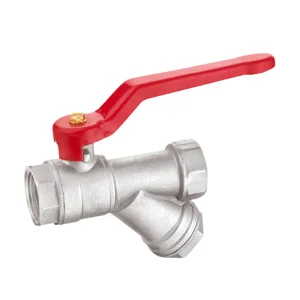
Water Filter Y9021

Y9021 Water Filter

The first line of defense in domestic water sanitation, designed to filter out 98% of impurities and scale in the pipeline, protecting downstream valves and manifold ports.

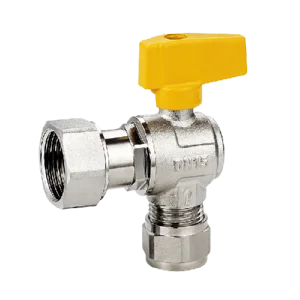
Boiler Angle Valve

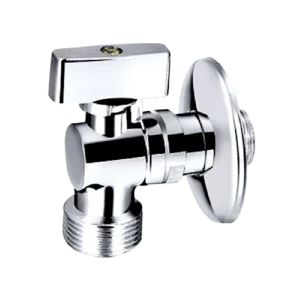
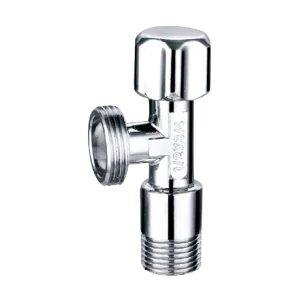
Boiler Angle Valve Y5001/Y5002

Controls the inflow and outflow of cold and hot water in heating boilers. Designed with a forged brass body and a durable spherical spool for long-term cycling.

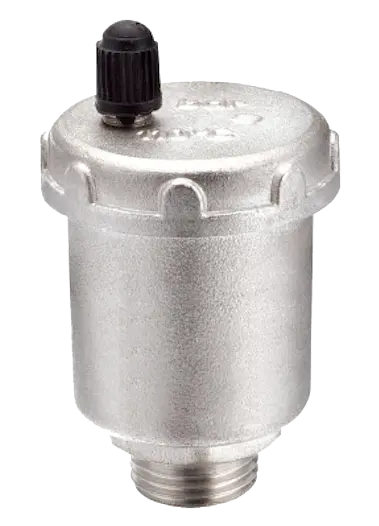
Venting Valve Y9070

Y9070 Venting Valve

Automatically discharges trapped air from hydronic lines and air-source water heaters, preventing air locks and ensuring stable flow patterns.

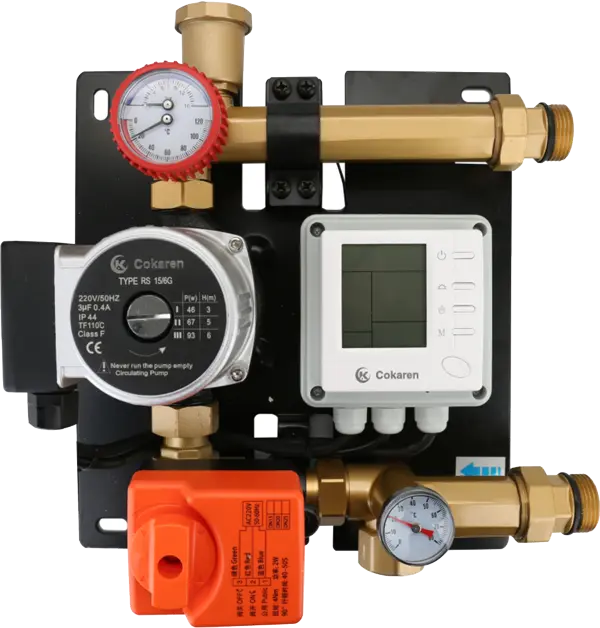
Mixing Shunt Y5020

Y5020 Mixing Shunt

Blends return water with hot supply water to stabilize temperature ranges, preventing damage to the underfloor piping network.

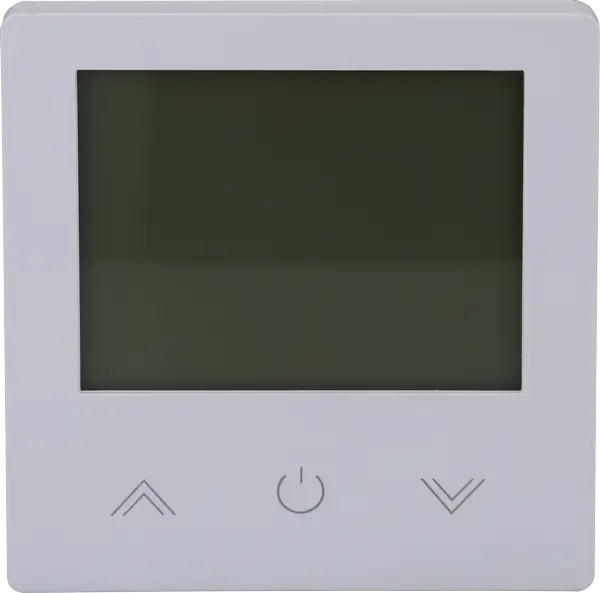
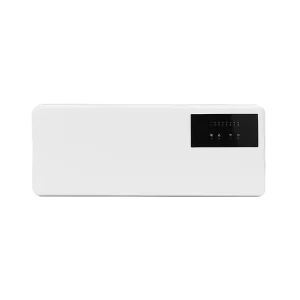
Smart Thermostat Y9031

Y9031 Smart Thermostat

Acts as the control interface, coordinating manifold actuators to regulate room temperatures and reduce energy consumption.

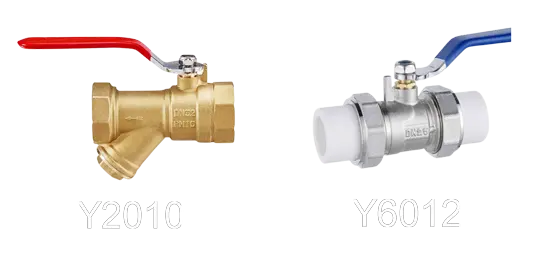
HVAC Valve Y2010

Y2010/Y6012 HVAC Valve

An all-in-one valve system configured to filter sediment, discharge air, regulate water pressure, and monitor real-time temperatures.

Localized Applications & Mechanical Environments

Adapting manifold configurations to specific regulatory requirements, climate demands, and structural layouts worldwide.

Residential Zoned Floor Heating (Europe)

In European residential buildings, underfloor heating manifolds typically interface with smart thermostats and individual loop actuators. Each room operates as an independent zone. Our stainless steel manifolds (CE-certified) provide the high corrosion resistance necessary for closed systems, where oxygen ingress through plastic tubing can cause iron oxide deposits. Precise flow meters allow builders to balance loops easily, ensuring even heat distribution throughout the house.

Snow Melt Systems (North America)

In colder regions of Canada and the northern United States, commercial and residential driveways use hydronic lines to melt snow. These systems circulate glycol-based heat transfer fluids. Our high-grade forged brass manifolds are resistant to chemical reactions with glycol and handle high-volume flow rates, ensuring walkways and loading docks stay clear of ice during heavy winter storms.

Commercial Radiant Cooling (Asia-Pacific)

Modern energy-efficient commercial buildings in Asia-Pacific use radiant systems for cooling as well as heating. Chilled water circulates through underfloor lines, requiring precise temperature control to prevent condensation. Mixing shunts and humidity sensor relays connect to the manifold actuators, keeping ambient surfaces comfortable and dry.

Global Enterprise Procurement & Compliance Guide

Understanding critical engineering and trade parameters required by international distributors and mechanical engineering firms.

Industrial and commercial procurement agents require clear assurance on manufacturing standards, quality control protocols, and material certifications. Below are the key points we address for global procurement partners:

  • Regulatory & Standardization Certifications: Fluid control products must meet local installation standards. Yongda valves and manifolds comply with European CE directives, ensuring all mechanical configurations satisfy local safety and pressure mandates.
  • Material Composition & Heavy Metal Limits: For drinking water installations, materials must meet strict lead-free and anti-dezincification standards (such as CW617N brass in Europe or low-lead brass in North America). We provide mill test reports for each production lot to confirm compliance.
  • 100% Leakage Testing Protocols: Our "Fine work, no leakage" standard means we test all manifold bodies and valve components. Products undergo pneumatic and hydraulic seal tests at their rated pressures before packaging, preventing leaks at the installation stage.
  • Custom OEM & Branding Options: For major plumbing brands, we offer custom port configurations (from 2 to 12 ports), private label engraving, custom flow meter scaling, and specific thread types (G thread, NPT, or solder connections).

Expert Hydronic Engineering Q&A

Direct technical answers addressing the key design and installation challenges faced by engineers and mechanical contractors.

Q1: What are the primary differences between brass and stainless steel manifolds in hydronic systems?
Both materials perform well in closed-loop systems, but stainless steel offers higher tensile strength and resistance to corrosive pitting. This makes it ideal for setups where oxygen may enter the loop through non-barrier plastic pipes. Brass (specifically CW617N) is easier to machine and remains the industry standard, offering high thermal stability and excellent corrosion resistance in typical closed systems.
Q2: Why is balancing a radiant floor heating manifold important?
Since different loops have varying run lengths, water naturally takes the path of least resistance, causing shorter runs to overheat while longer loops remain cold. Adjusting flow meters on the manifold matches loop resistance, ensuring even heat distribution throughout the property.
Q3: How does a mixing shunt unit protect an underfloor heating system?
Boilers often produce high-temperature water (above 60°C/140°F) for domestic use or radiator networks. Underfloor heating lines (typically PEX) and screed concrete floors require lower temperatures (typically 35°C to 45°C) to prevent floor cracks and structural damage. The mixing shunt blends hot supply water with cooler return water to maintain safe operating temperatures.
Q4: What certifications should global distributors look for in brass and stainless steel valves?
Distributors should prioritize manufacturers certified under ISO9001 (Quality), ISO14001 (Environmental Management), and ISO45001 (Safety). Product certifications, such as CE marking for the European Union, confirm that the valves meet structural safety, pressure resistance, and environmental standards.
Q5: How does Yuhuan Yongda's quality control process prevent leaks in high-pressure installations?
Our "Fine work, no leakage" standard uses a multi-stage quality control process. We run material spectrograph checks on copper castings, use precise CNC tooling to match thread tolerances, and perform 100% pneumatic pressure tests on assembled valves and manifolds before packaging to guarantee leak-free performance.
All Manifold Products