 Yongda
Yongda
Yongda
In modern water infrastructure, building service networks, and industrial manufacturing facilities, managing hydraulic pressure profile stability is paramount. Engineers seek advanced Clay Valve PRV (Pressure Reducing Valve) equivalents and direct mechanical solutions to mitigate safety hazards such as water hammer, burst supply networks, and accelerated system degradation.
Global mechanical procurement pipelines demand not just generic supply catalog items, but custom-engineered, heavy-duty pressure regulation systems. By sourcing from dedicated exporters positioned at the heart of specialized casting and machining clusters, global engineering companies secure pricing efficiency while ensuring conformance to international design benchmarks.
Procurement professionals routinely look for high-grade mechanical control valves with exceptional flow coefficients (Cv values). They balance performance against long-term maintenance costs. Finding qualified exporters who provide reliable lead-free brass, forged bronze, and custom piston PRVs matches the critical industry demand for continuous operation under severe environmental stress.

Founded in 1996 in the "China valve capital" - Yuhuan, Zhejiang, Yuhuan Yongda Fluid Control Co., Ltd. (formerly Yuhuan Yongda Plumbing Co., Ltd.) has evolved into an industry-leading OEM/ODM partner. We focus on product design, development, production, and sales of high-tier brass valves, fittings, and HVAC systems.
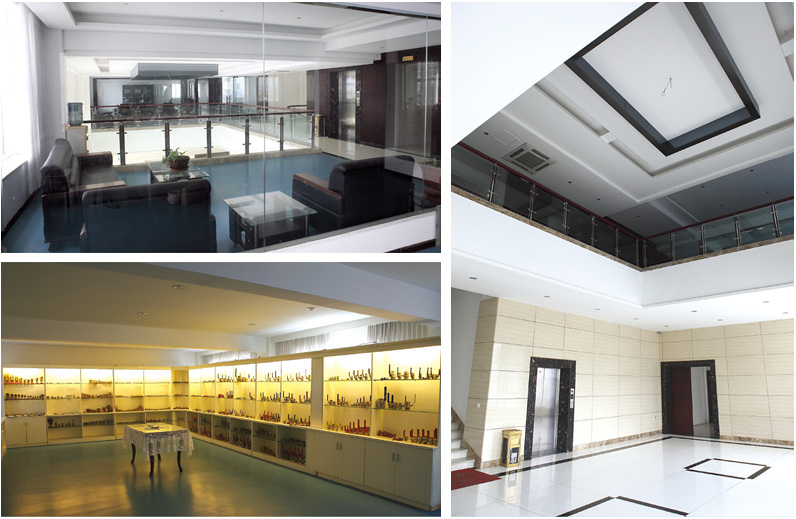
Operating a sprawling manufacturing area exceeding 45,000 square meters (with an actual usable floor area reaching 80,000 square meters), our plant is outfitted with over 600 sets of advanced production and testing apparatus, including 80+ dedicated multi-axis special machine tools. With premium product positioning and an environmental protection-focused approach, our exports serve clients in over 20 countries across North America, Europe, and Asia.
Under our proprietary Cokaren brand, guided by the promise "keep flowing, keep warming," we develop refined products that provide comfort, safety, and energy efficiency for residential and commercial heating water systems.
Engineering high-durability PRVs requires precision metallurgical control, optimized fluid dynamics, and structured resistance testing under static and dynamic loads.
Our valves use top-grade CW617N, DZR (Dezincification Resistant), and lead-free brass formulations. This guarantees superior mechanical integrity, prevents dezincification in aggressive water environments, and ensures strict compliance with NSF/ANSI 61 and European potable water safety standards.
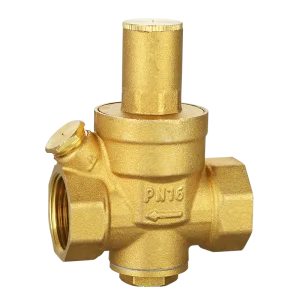
Engineered with special piston and diaphragm geometries, our pressure reducing valves balance downstream pressure fluctuations regardless of upstream inlet variations. Strategic flow channel shaping reduces cavitation risk, ensuring noise-free and vibrationless operations in high-rise buildings.
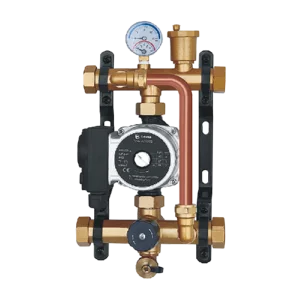
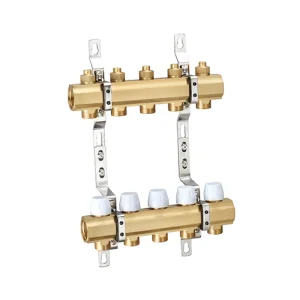
Designed for seamless inclusion inside complex water distribution networks, manifolds, and boiler configurations. By incorporating smart temperature sensors and electric actuators, these valves play a crucial role in modern energy-efficient HVAC designs and thermal comfort solutions.
As global commercial infrastructure integrates automation technologies, mechanical valves are transforming into telemetry-equipped, active flow management nodes. Our technical roadmap focuses heavily on building-level smart grids where pressure sensors, mixing units, and thermostats communicate dynamically.
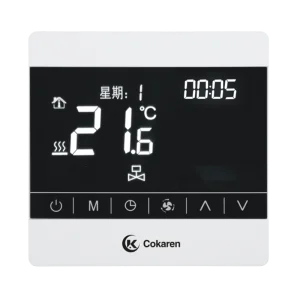
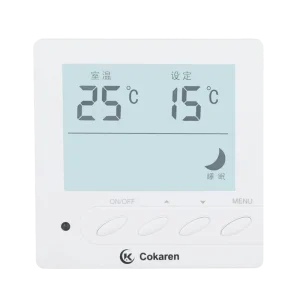
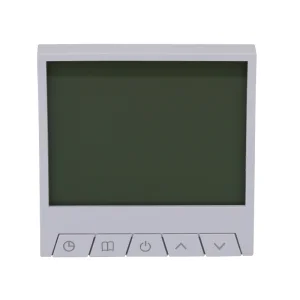
Leveraging our ISO9001-2015, ISO14001-2015, and ISO45001-2018 certified management processes, we are developing smart mechanical combinations. Integrating components like the Y9031 Smart Thermostat with mixing systems ensures that real-time flow temperature, flow volume, and system static pressures are monitored and optimized automatically.
Our quality policy — "fine work, no leakage" — guarantees that every component leaving our facility is rigorously pressure-tested to handle varying operational loads, reducing structural water losses and carbon footprint across urban networks.
Understanding how individual plumbing and HVAC components interface with the main water loop is vital for optimizing thermal performance and balancing pressures.
Before fluid enters highly sensitive pressure reducing valves, water filtration is mandatory. Suspended sand, weld slag, and rust particles can damage elastomer seals, leading to valve seating failure.
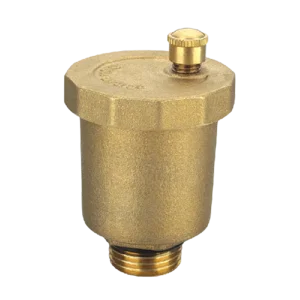
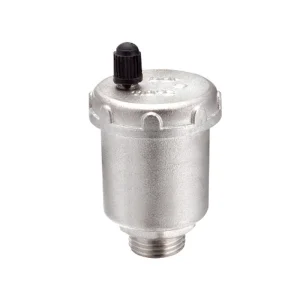
Our Y9021 water filtration systems capture up to 98% of circulating particulates, preserving the calibration of downstream PRVs. Combined with air release venting valves and temperature control shunts, it ensures the integrity of high-value HVAC equipment.

Sourcing piping products internationally introduces regulatory concerns. To guarantee trouble-free installation and approval by local municipal authorities, our entire engineering line is engineered with local compliance in mind.
Whether conforming to NPT threads for the North American market or BSPP/BSPT threads for the European and Commonwealth regions, our CNC machining capabilities yield thread tolerances that fit perfectly. Our certification portfolio includes comprehensive environment and safety stamps, proving our commitment to responsible manufacturing.
We provide our global B2B procurement partners with comprehensive design documentation, detailed flow curves, CAD files, and material certificates to streamline project engineering approvals.

Get authoritative answers to technical considerations, sourcing logistics, and structural implementation questions.