 Yongda
Yongda
Yongda
Explore our primary collection of high-durability, CE-certified threaded ball valves and plumbing components designed for high-precision HVAC and commercial domestic water installations.
In modern fluid dynamics and construction infrastructure, the selection of premium-grade components is the baseline for security, durability, and operational system integrity. Yuhuan Yongda Fluid Control Co., Ltd. (formerly Yuhuan Yongda Plumbing Co., Ltd.) has sat at the vanguard of high-precision brass valve metallurgy and engineering design since its founding in 1996.
Based in the globally recognized hub of Yuhuan, Zhejiang—the official "China Valve Capital"—our enterprise leverages decades of technical expertise. We focus on product design, advanced engineering, rigorous quality testing, and comprehensive export capabilities. By maintaining a focus on environment-friendly, high-performance alloys, we deliver solutions that consistently meet the regulatory specifications of markets in North America, Europe, and Asia.
To offer elevated refinement and superior longevity, our premium brand, Cokaren, delivers refined designs that embody our brand promise: "Keep flowing, keep warming". Through this roadmap, we provide long-lasting comfort and high structural integrity to hydronic water networks worldwide.

A CE marking is not merely a marketing indicator; it is a critical statement of conformity showing compliance with the European Union's stringent safety, health, and environmental standards. For threaded ball valves, CE certification relies heavily on the Pressure Equipment Directive (PED) 2014/68/EU and specific product standards such as EN 13828 (for manual brass ball valves in drinking water systems).
Valves categorized as pressure accessories must be designed and manufactured in accordance with Sound Engineering Practice (SEP) or comply with Category I, II, or III conformity assessment modules, depending on their nominal size (DN), maximum allowable pressure (PS), and the fluid category (Group 1 hazardous or Group 2 safe fluids).
Regulatory changes (such as RoHS, REACH, and the European Drinking Water Directive) require strict limitations on lead content in brass. We employ advanced brass grades like CW617N (EN 12165) and special lead-free alloys to prevent toxic heavy metals from leaching into domestic water networks.
To secure a leak-proof seal without causing excessive stress, threads are precision-cut in compliance with ISO 228-1 (parallel threads, BSPP) or ISO 7-1 / NPT (tapered threads). This ensures compatibility across international plumbing architectures.
Yongda's validation process includes 100% pneumatic testing for air-leakage pathways, followed by hydrostatic test protocols at 1.5 times the maximum working pressure rating. This approach guarantees zero leakage and aligns directly with our quality policy: "Fine work, no leakage."
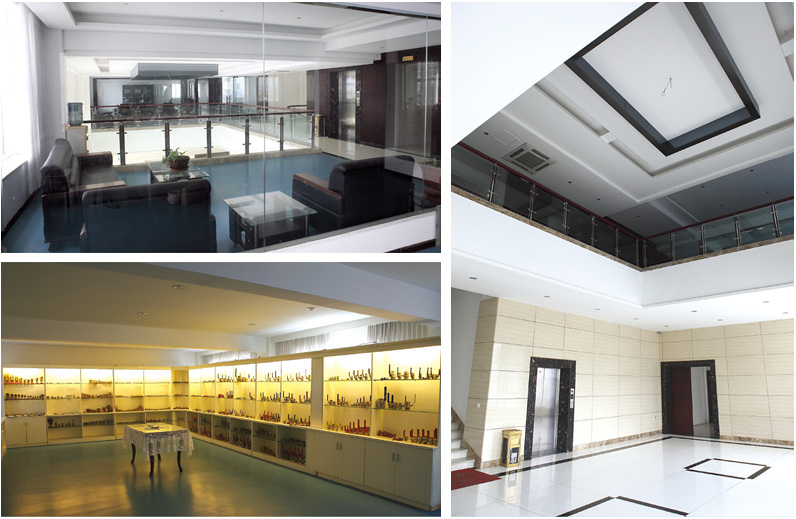
Leveraging a factory area of over 45,000 square meters (with a total usable floor layout of 80,000 square meters), Yuhuan Yongda utilizes a Factory 4.0 production framework. This integration minimizes production deviations, increases cycle speeds, and reduces overall energy footprint.
We have installed more than 600 sets of advanced processing and inspection apparatus, including 80+ high-precision specialized CNC machine tools. This technology allows us to maintain tight tolerances and ensure structural concentricity in our threaded ball valves.
By controlling the entire process from hot forging and high-speed drilling to precision machining and final assembly in-house, we insulate our operations against global supply chain volatility. Our integrated infrastructure enables us to customize products for OEM/ODM clients with short lead times while keeping prices highly competitive.
Modern construction demands smart heating, ventilation, and air conditioning (HVAC) systems that maximize energy conservation. Threaded ball valves and manifold subsystems act as the primary fluid distribution gateways in these high-efficiency building networks.
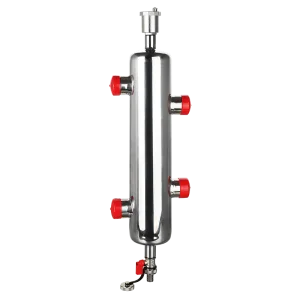
By integrating balancing valves, temperature control modules, and the Y5020 Mixing Shunt, building managers can optimize differential pressure profiles. This prevents thermal shock in floor-heating installations, improves boiler operating margins, and reduces municipal energy consumption by up to 22% compared to un-throttled bypass setups.
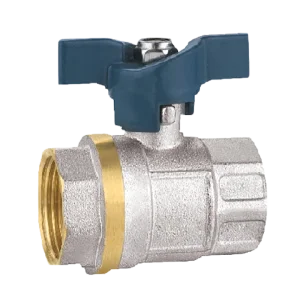
To help procurement engineers draft exact specification datasheets, we provide this structural design breakdown of our classic CE-certified threaded ball valves:
Formed from hot-forged brass (CW617N or equivalent lead-free formulation). Forging eliminates micro-porosities and grain alignment weaknesses common in cast brass, providing superior resistance to water hammer damage.
The internal solid ball is chrome-plated and diamond-polished to a mirror finish. This reduces friction torque and extends the service life of the virgin PTFE (Teflon) valve seats to over 50,000 open-close cycles.
Our stems feature an internally inserted, blowout-proof shoulder design. Dual Viton or EPDM O-rings provide reliable secondary containment, preventing external fluid release under sudden high-temperature and high-pressure excursions.
As building technologies advance, the role of manual ball valves is expanding. Our engineering department is actively pursuing next-generation smart integrations:
We are expanding our product line to include automated actuated ball valves featuring ultra-low-power electric actuators. These support Modbus and BACnet protocols, enabling automatic flow balancing in smart building management systems.
To stay ahead of future environmental regulations, we are transitioning to lead-free silicon-brass alloys. These provide high mechanical strength and corrosion resistance without the addition of lead.
Through fluid dynamics simulation (CFD), we optimize the internal port profile of our standard valves. This design maximizes flow coefficients ($K_v$) while reducing turbulence and wear, which lowers pumping energy demands.
For engineering consultants, plumbing wholesalers, and system integrators, selecting a valve supplier involves evaluating their long-term supply chain reliability and quality assurance practices.
Our facility maintains a comprehensive quality management framework certified to ISO 9001:2015 (Quality Management), ISO 14001:2015 (Environmental Management), and ISO 45001:2018 (Occupational Health & Safety). This structured compliance ensures that every valve batch, from raw brass billet to final packaging, is fully traceable.
With our proprietary logistics channels and automated manufacturing lines, we maintain stable production lead times even during seasonal demand spikes. This reliable capability helps our global partners minimize inventory holding costs and optimize their supply chains.
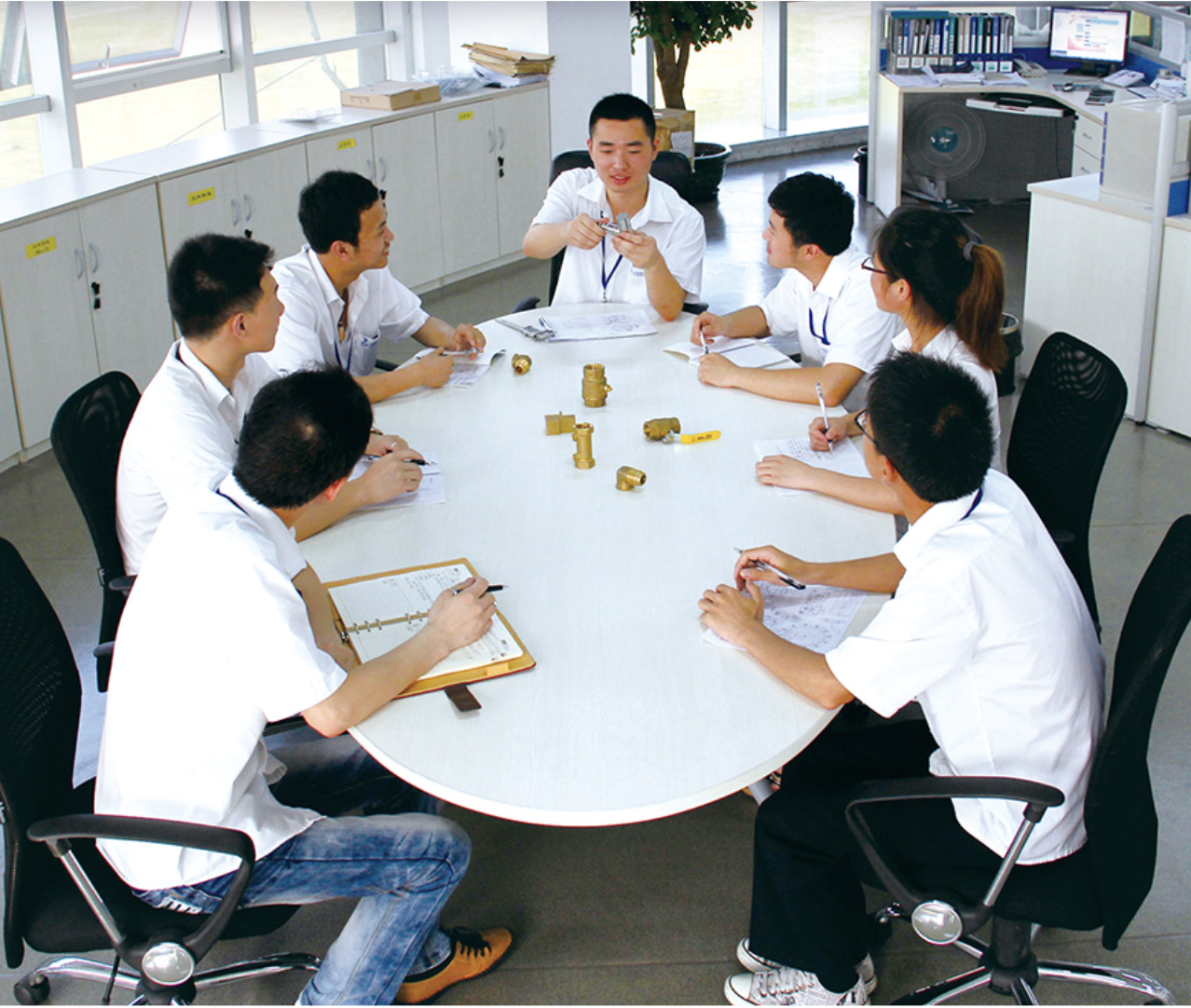
We answer the most common questions raised by mechanical engineers, HVAC installers, and quality assurance managers:
Under the Pressure Equipment Directive (PED) 2014/68/EU, ball valves are classified based on their operating pressure (PS) and nominal size (DN). For safe fluids (Group 2, such as heating water), valves below DN25 or with a pressure-volume product below 1000 bar-liter fall under Sound Engineering Practice (SEP) and do not bear the CE mark. Larger valves or those handling hazardous fluids require full conformity assessment and carry the CE mark to certify compliance with EU safety requirements.
CW617N (CuZn40Pb2) is the European standard for hot forging brass. It offers an optimal balance of machinability, tensile strength, and corrosion resistance. It is highly resistant to dezincification (DZR) and stress corrosion cracking when exposed to typical tap water conditions, ensuring system safety and performance.
Our quality assurance team tests raw materials using optical emission spectrometers (OES) and inductively coupled plasma mass spectrometry (ICP-MS). This ensures that lead and other heavy metal concentrations stay within regulatory limits before the production process begins.
BSPP (British Standard Pipe Parallel, ISO 228-1) threads have a constant diameter and rely on an external gasket, O-ring, or washer to create a seal. NPT (National Pipe Tapered, ANSI B1.20.1) threads feature a 1.78-degree taper and form a mechanical seal through thread interference, which typically requires PTFE tape or thread sealant to prevent bypass leaks.
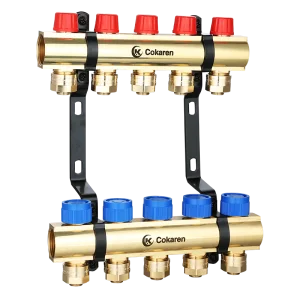
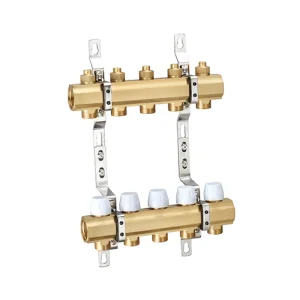
A mixing shunt (such as our Y5020) blends hot supply water with cooler return water. This maintains consistent, lower-temperature loops for underfloor heating while allowing the boiler to run at higher, more efficient temperatures. Manifolds distribute this flow evenly across zones to prevent localized overheating and reduce energy consumption.
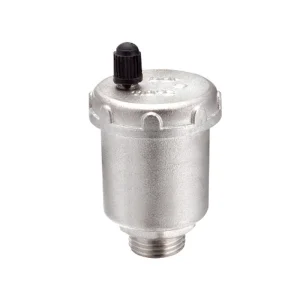
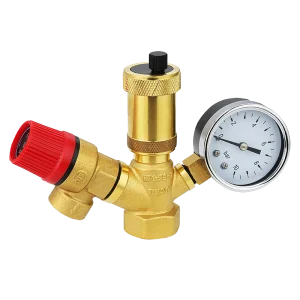
Browse our secondary selection of specialized control valves, air release vents, and safety groups designed to optimize hydronic system performance and stability.