 Yongda
Yongda
Yongda
High-precision manufactured brass components designed for direct replacement and complex system integrations
An authoritative analysis of fluid control mechanics, municipal fluctuation dampening, and valve design criteria
In high-performance hydronic distribution, civil water supply networks, and HVAC systems, maintaining stable operating pressures is critical to structural durability and efficiency. A Pressure Regulator Reducer (PRR) functions as a dynamic, autonomous control device. It intercepts erratic, high-velocity municipal or upstream water flow and reduces it to a stable, manageable downstream pressure. This prevents water hammer anomalies, pipe structural fatigue, gasket rupture, and terminal fixture wear.
From an engineering perspective, modern brass pressure reducing valves utilize a balanced spring-loaded piston or diaphragm assembly. When downstream pressure fluctuates, the differential force acting on the internal diaphragm adjusts the flow orifice width. This creates a self-compensating mechanism governed by the equation:
For global engineering firms, real estate developers, and infrastructure sourcing teams, identifying a qualified manufacturer in China is not just about price. It is about sourcing components built to strict metallurgical and mechanical standards. By selecting valves manufactured in specialized regions like Yuhuan, sourcing professionals ensure access to certified materials, precise forging machinery, and advanced testing facilities.
Sudden pressure drops inside a valve can cause micro-bubbles to form and collapse violently. This process, known as cavitation, degrades internal brass surfaces. Our premium PRR models use custom-contoured flow paths and cavitation-resistant piston sleeves to maintain quiet operation and prevent erosion, even under high differential pressures.
In municipal systems, inlet pressure changes based on peak usage hours. Our double-seat dynamic balancing systems automatically compensate for these supply fluctuations. This ensures consistent downstream outlet pressure, regardless of upstream pressure spikes or drops.
We use HPb59-1 lead-free brass and DZR (Dezincification Resistant) alloys. This prevents selective zinc leaching in corrosive, high-temperature, or chlorinated environments, maintaining long-term mechanical strength and ensuring safe drinking water.
A deep dive into Yuhuan Yongda Fluid Control Co., Ltd. and its high-end brand, Cokaren
Founded in 1996, Yuhuan Yongda Fluid Control Co., Ltd. (formerly Yuhuan Yongda Plumbing Co., Ltd.) has grown alongside China's modern hydronic valve manufacturing industry. We are located in Yuhuan, Zhejiang Province—widely recognized as the "Valves Capital of China." Over the past three decades, we have established ourselves as a leading, vertically integrated enterprise. Our capabilities span product design, mold development, precision hot-forging, CNC machining, automated testing, and global sales.
Our product lineup is built around three core pillars: Brass Valves, Precision Fittings, and HVAC Control Components. We specialize in mid-to-high-grade products designed for environmentally conscious international markets, particularly in North America, Europe, and developed metropolitan zones. To meet these high expectations, our engineering teams focus on low-lead, lead-free brass formulations and high-performance polymers.
To better serve premium residential markets and high-end commercial projects, we introduced our dedicated brand, Cokaren. Operating under the brand promise "Keep flowing, keep warming," Cokaren is dedicated to delivering water systems and HVAC accessories that ensure comfort, stability, and energy savings. We aim to establish Cokaren as a dynamic, globally recognized brand known for reliable performance and engineering support.

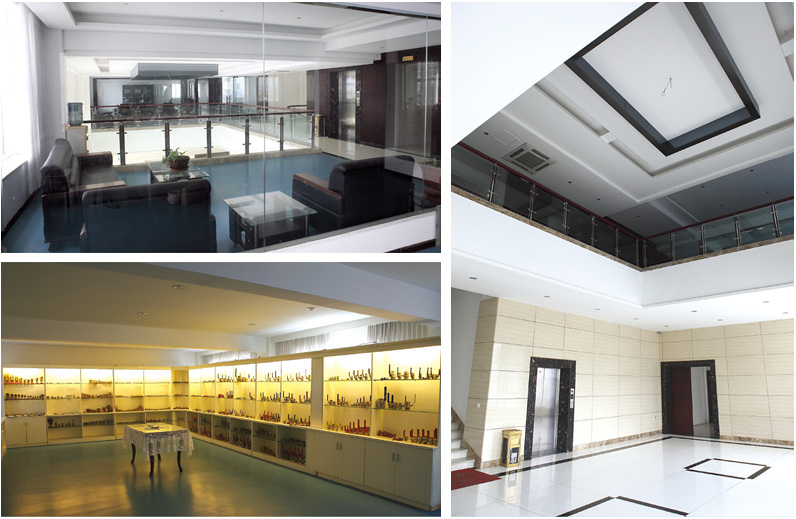
Our manufacturing capacity is supported by an industrial footprint. Our facility covers over 45,000 square meters, with an actual usable production and warehousing area of 80,000 square meters. The production floor features over 600 sets of advanced manufacturing and testing equipment. This includes more than 80 sets of specialized high-precision machine tools, automated transfer lines, and multi-axis CNC units.
This automated setup helps minimize manual errors, ensuring consistent sizing and assembly across large production runs. We export to over 20 countries, adapting our manufacturing lines to meet various local plumbing standards (such as NPT, BSP, and solder-joint connections) as requested by international buyers.
Our commitment to operational excellence, environmental safety, and zero-defect manufacturing
Culture: Struggle, Enterprising, Pragmatic, Innovative
Tenet: Customer First, Quality Based
Quality Policy: Fine Work, No Leakage
We work to develop our manufacturing capabilities while improving employee safety and well-being. Our goal is to balance corporate growth with personal and community development.
Our factory operations are certified under three key management systems:
These certifications ensure that our valves, manifolds, and fittings are manufactured under consistent quality control and in a safe working environment.
Every batch of pressure regulator reducers and brass safety valves undergoes multiple stages of testing. This includes optical spectrum analysis to confirm alloy compositions, dimensional checks using digital micrometers, and 100% pneumatic/hydrostatic pressure testing. The pressure tests verify that both the shell and seats are leak-free under dynamic conditions before packaging and shipment.
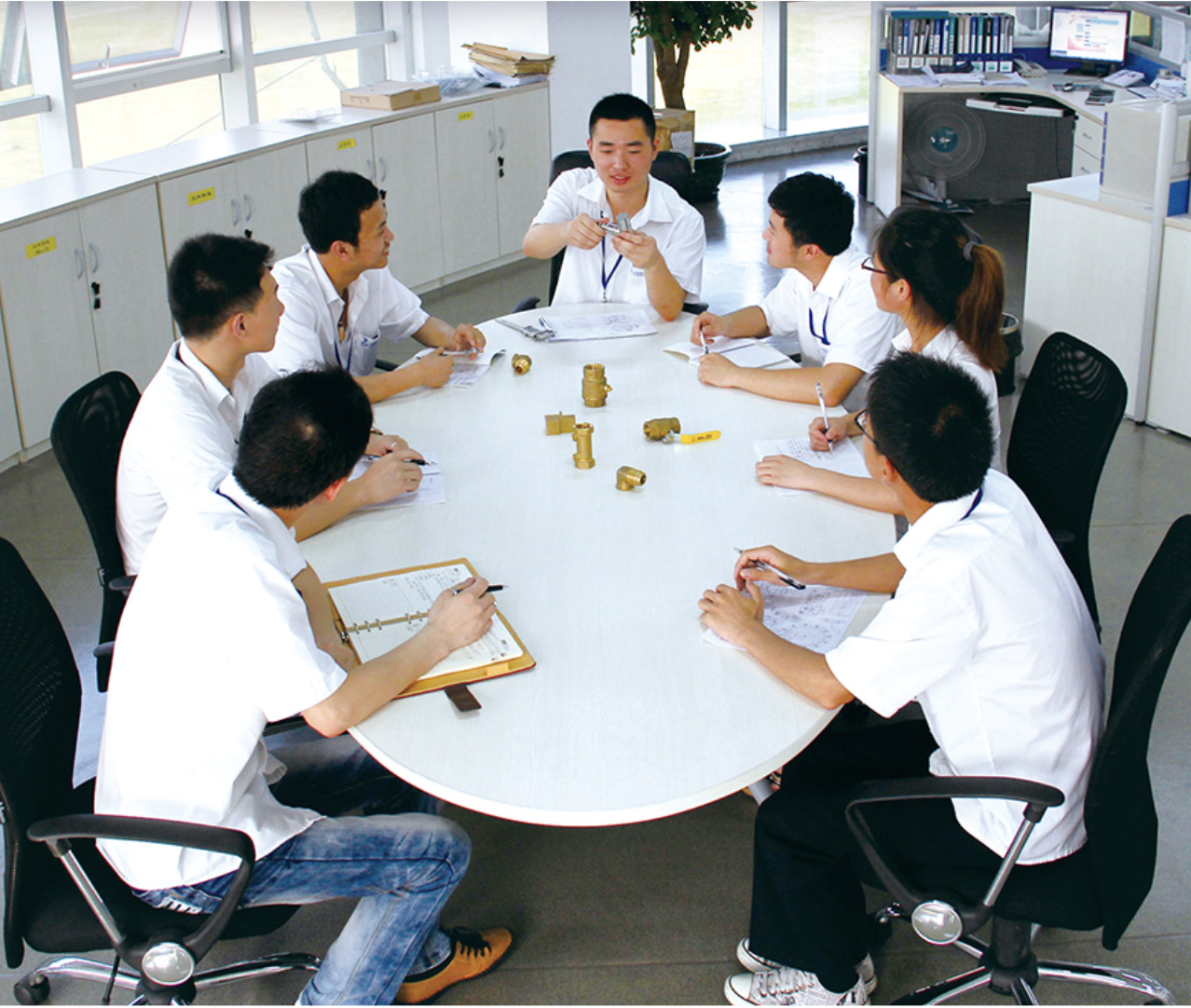

Why global purchasing directors select China for precision brass components
Yuhuan's valve manufacturing cluster covers the entire supply chain. From raw material refineries and forging shops to tooling manufacturers, surface treatment facilities, and testing labs, every step is located close together. This geographic concentration reduces internal transport times and lowers handling costs, helping us maintain competitive pricing.
We use automated hot-forging presses alongside multi-spindle machining centers. This allows us to manufacture complex valve bodies with minimal wall-thickness variations. The resulting high dimensional accuracy prevents structural weaknesses, helping the valve bodies withstand high pressure spikes.
Our facility is located near major global shipping ports, including Ningbo-Zhoushan and Shanghai. This allows for direct container loading, streamlined customs processing, and reliable scheduling, helping international buyers maintain consistent inventory levels.
How our pressure regulation and flow control valves operate across different piping applications
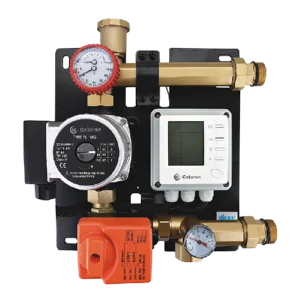
Underfloor heating systems operate at lower temperatures and pressures than primary boiler loops. Utilizing water mixing shunts (like the Y5020 or Y1001 manifold series) alongside a pressure reducer ensures that the composite PEX-AL-PEX pipes are not exposed to excessive pressure, preventing joint leaks and maintaining balanced heat distribution.
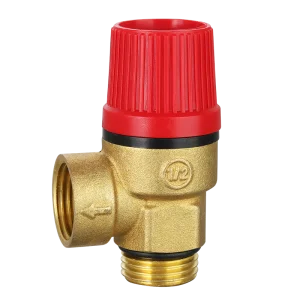
Automatic pressure relief valves (such as the Y9070 automatic venting valve and safety valves) protect hot-water storage tanks. As water is heated, it expands. Without functional relief valves and incoming pressure regulators, this expansion can stress water heater seams, leading to premature tank failure.
Municipal water lines often experience pressure surges at night when overall demand drops. Installing a main line pressure reducing valve at the building's point of entry reduces this incoming pressure to a safe level, protecting downstream fixtures, water filters, and smart thermostats.
A guide to the factors that determine commercial brass valve pricing
Understanding the pricing structure of Chinese brass valves helps purchasing departments negotiate effectively and select components that match their technical requirements. Prices for pressure regulators, relief valves, and manifolds are primarily driven by four factors:
Brass is an alloy made primarily of copper and zinc. The price of our valves is tied to the London Metal Exchange (LME) copper prices. Low-lead or DZR brass alloys require specialized processing and raw materials, making them more expensive than standard brass grades (such as HPb57-3). Sourcing departments should specify the exact alloy required for their local regulatory compliance.
Piston-type pressure regulators require precise tolerances to maintain reliable pressure settings. Multi-stage CNC machining and automated polishing increase manufacturing times but ensure a reliable, leak-free seal. Simple bibcocks or static strainers are less complex to machine and carry a lower production cost.
Electroplated finishes, such as nickel or chrome plating, provide extra resistance against corrosion and oxidation. These finishes are commonly used in exposed or damp installations. While unplated, sand-blasted brass is more economical, plated finishes help extend the valve's service life in challenging environments.
Answers to common engineering, installation, and procurement questions
Explore our range of matching accessories, multilayer pipes, and custom fittings