 Yongda
Yongda
Yongda
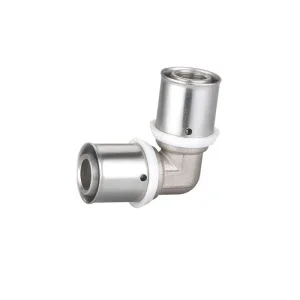
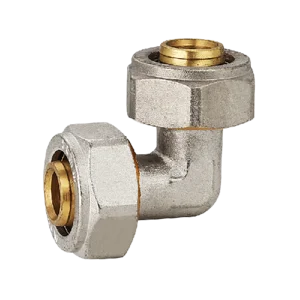
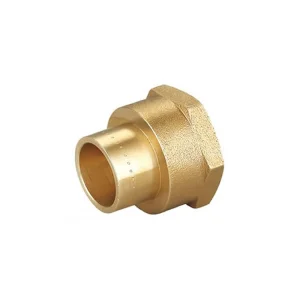
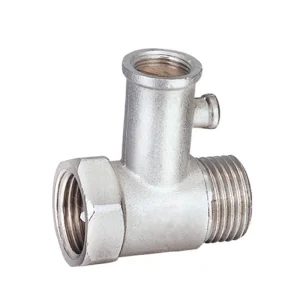
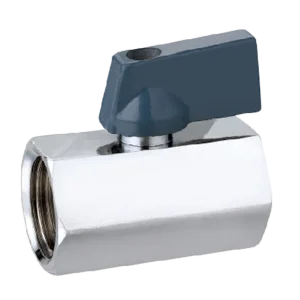
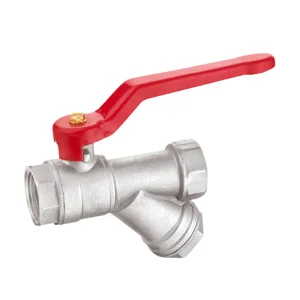
Established in 1996, Yuhuan Yongda Fluid Control Co., Ltd. (formerly known as Yuhuan Yongda Plumbing Co., Ltd.) has positioned itself as an industry leader in the design, development, and export of high-precision brass valves, fittings, and HVAC systems. Strategically based in Yuhuan, Zhejiang—widely acclaimed as the "China Valve Capital"—Yongda represents the pinnacle of modern Chinese fluid engineering.
Our core product lines target middle and high-grade international markets, engineering eco-friendly solutions favored by system integrators and distributors throughout North America and Europe. Under our premier brand, Cokaren, we advocate the mission of "keep flowing, keep warming", producing heating, ventilation, and plumbing systems designed for unparalleled reliability and seamless operational life cycles.
Founded In
Factory Area (sq.m.)
Advanced Production Units
Exported Countries
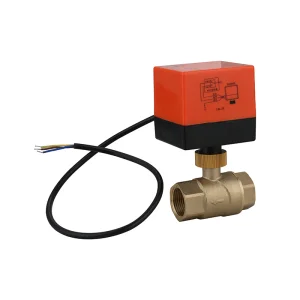
In modern commercial HVAC, district energy systems, and critical industrial processing lines, the role of a Spring Return Valve (often deployed as fail-safe emergency shutdown or balancing systems) is indispensable. Unlike standard double-acting actuated valves, a spring return valve stores mechanical energy within heavy-duty stainless steel springs during normal electrical or pneumatic operation. Should power or control signal failure occur, the stored energy is instantly released, returning the valve to its default safe posture (normally closed or normally open).
Global regulations (such as NSF/ANSI 372 in the USA and European Drinking Water Directives) require plumbing systems to use lead-free brass formulations. Yongda uses premium alloy compositions like CW617N and DZR to protect potable water networks and prevent toxic leaching.
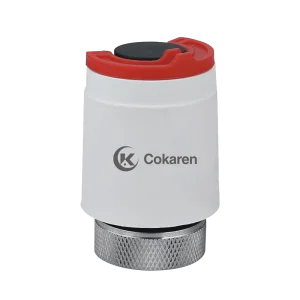
Thermal and electric actuators (such as our high-quality Y9031 Smart Thermostat system compatibility) are integrated into digital building management systems (BMS) to optimize water flows and lower energy footprints.
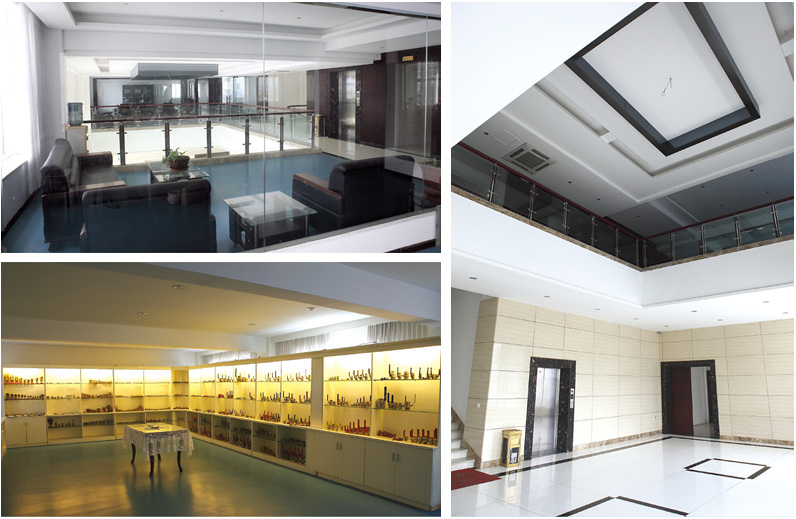
Global procurement teams favor manufacturers with massive vertically integrated production areas to insulate themselves from spot market shocks. Yongda’s 80,000 sqm usable factory space fulfills this requirement.
At Yongda, we run more than 600 sets of advanced production and testing equipment, including 80+ specialized machine tools that handle high-accuracy machining tasks. By controlling the entire manufacturing sequence—from raw brass rod extrusion and hot forging to precision CNC turning and final assembly—we verify the dimensional and metallurgical integrity of every batch.
Our core quality policy is simple: "Fine work, no leakage." To achieve this, every spring return valve, mixing shunt, and underfloor heating manifold undergoes rigid high-pressure pneumatic and hydrostatic tests. Our operations are fully ISO-certified:
Understanding the distinct application conditions where spring return mechanical operations, thermostatic valves, and high-performance manifolds are installed.
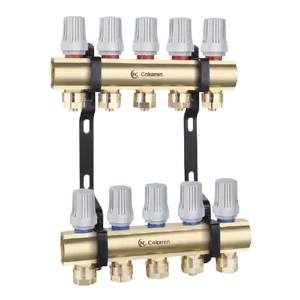
Hydronic underfloor radiant networks rely on precise distribution blocks. Systems like the Y1001 Manifold split the high-temperature water supply into several secondary loops. When these loops run alongside our Y9031 Smart Thermostat and electric actuators, the zone valves operate to balance room temperatures. Adding bypass assemblies prevents pressure spikes during partial shutoffs.
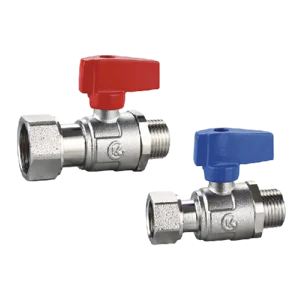
In boiler loops, thermal shock and condensation can shorten equipment lifespans. Using our Y5020 Mixing Shunt allows systems to recirculate water and stabilize inflow temperatures. Meanwhile, specialized components like the Boiler Angel Valve Y5001/Y5002 use a spherical brass spool to isolate sections for maintenance, protecting the primary boiler unit from scaling.
For project engineers and procurement specialists, deciding between actuator options is critical to both budget and system safety. The table below outlines how spring return designs compare against standard options.
| Functional Parameter | Spring Return Valve (Fail-Safe) | Double Acting Actuated Valve |
|---|---|---|
| Primary Power Loss Action | Mechanical springs immediately close/open the valve to a safe state. | Stays in its current position until power is restored. |
| Initial Hardware Cost | Higher initial cost due to internal mechanical springs. | Lower cost, relying entirely on continuous external supply lines. |
| Operational Risk Profile | Low risk. Highly recommended for hazardous or thermal fluid lines. | Moderate risk. Requires backup power for fail-safe operation. |
| Maintenance Intervals | Periodic spring checks are recommended for high-cycle systems. | Lower mechanical wear, but seal inspection remains critical. |
| Best Applications | Emergency shutdown, steam loops, toxic lines, main building headers. | Standard mixing systems, flow regulation loops, and venting. |
B2B buyers should look beyond initial quotes to understand the cost drivers of brass valves and actuator assemblies. The factory-direct price is determined by several core variables:
Brass formulations (like CW617N, DZR, or low-lead alternatives) use different copper-to-zinc ratios. Prices fluctuate based on LME raw copper exchange indexes. Premium DZR brass carries a higher raw material cost but prevents dezincification in aggressive environments.
Integrating thermoelectric actuators, proportional 0-10V control setups, or basic on/off thermal actuators directly impacts overall assembly pricing. Spring return forces must match the system differential pressure to prevent seat leakage.
Meeting standards like CE certification, EN 12164 compliance, and ISO quality management policies requires specialized testing equipment and certification upkeep. These compliance costs are built directly into premium export prices.