 Yongda
Yongda
Yongda
Engineered to exceed Massachusetts backflow prevention codes and withstand high pressure variations in multi-zoned district hydronic and municipal pipelines.
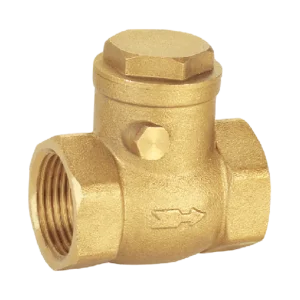
Designed for residential water feed and reverse-flow protection in typical Boston residential hydronic systems.
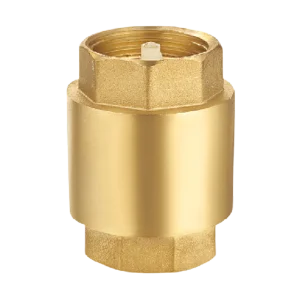
High-strength manual internal thread system designed for direct inline steam and hot water return systems.
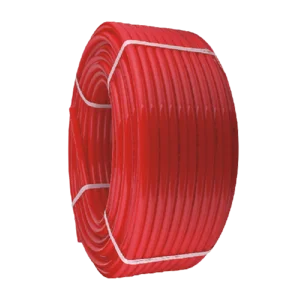
Superior heat dissipation PEX tubing constructed for New England's rigorous sub-zero winter thermal loads.
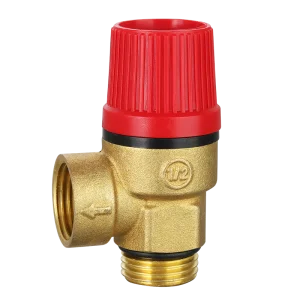
Automatic pressure relief and thermal expansion control valve optimized for high-rise residential boiler setups.
Boston, Massachusetts represents one of the most historically significant and technologically advanced municipal landscapes in North America. From the district steam networks of the Downtown core to the sterile biopharma research facilities of Kendall Square and the Seaport District, fluid dynamics play a silent but critical role in maintaining business continuity and public health. In these complex municipal and industrial networks, the prevention of backflow—defined as the unwanted reversal of fluid flow—is paramount.
In municipal water distribution systems overseen by the Massachusetts Water Resources Authority (MWRA), cross-connection control policies dictate that reliable check valves must isolate potable water networks from industrial process loops. Boston's older architectural footprint presents a unique set of plumbing challenges: retrofitting low-pressure steam heating lines and high-temperature hydronic loops in structures dating back to the late 19th and early 20th centuries requires valve assemblies that offer extremely low cracking pressure, zero-leak sealing capabilities, and durable material compositions that resist dezincification and galvanic corrosion.
Prevents siphonage and high back-pressure loops within historic municipal networks throughout New England.
Decreases energy consumption by maintaining fluid inertia and avoiding dynamic head-loss variables.
Adheres strictly to lead-free standards to ensure compatibility with safe potable water networks.
To optimize fluid loops for commercial applications, engineers must understand the mechanical behaviors of spring-loaded check valves compared to traditional swing-type configurations. A spring-loaded check valve operates using a calibrated spring that forces the internal disc onto its elastomer or metal seat once forward flow velocity drops below a critical threshold. This proactively prevents flow reversal before the fluid column can change direction, virtually eliminating water hammer (hydraulic shock waves that can fracture cast-iron pipe joints in older Boston properties).
Conversely, swing check valves utilize gravity and pressure differentials to pivot a hinged disc. While swing valves offer a higher flow coefficient ($C_v$) and minimal flow restriction, they are highly prone to slamming in rapid-cycle pump discharge setups. Understanding the pressure drop curves ($\Delta P$) and velocity distributions is essential for system designers looking to mitigate energy losses. By sourcing valves with optimized flow geometries and low-drag seat paths, procurement officers can secure significant long-term energy savings across industrial facilities.
Essential connection and safety elements configured for seamless deployment with standard American PEX plumbing and boiler configurations.
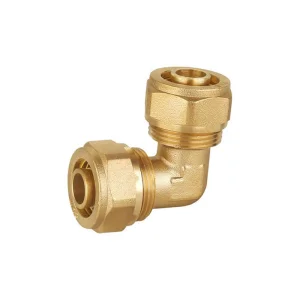
Heavy-duty compression fittings engineered to provide hermetic seals on multi-layer PEX plumbing systems.
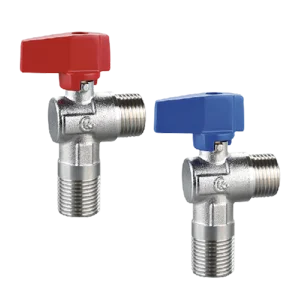
Precision temperature-and-pressure valves designed for commercial and domestic hot water storage tanks.
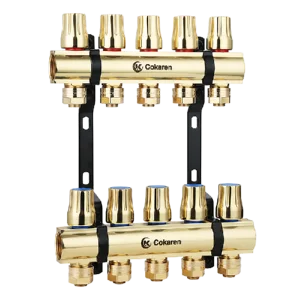
Multi-port distribution manifolds that provide balanced volume flow control to sub-surface heating zones.
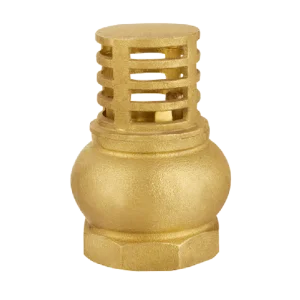
Equipped with integrated brass mesh filtration to prevent solid contaminants from entering pumping lines.
The global industrial valve market is valued at tens of billions of dollars, driven primarily by infrastructure aging in mature Western markets and rapid urbanization in developing regions. For engineers and B2B purchasing managers in Boston and across the United States, importing high-performance brass check valves requires balancing landed cost with stringent compliance metrics. Navigating standard logistics bottlenecks demands partnering with established exporters who understand both manufacturing tolerances and international shipping paradigms.
Modern check valve manufacturing is dominated by cluster-based industrial areas. The consolidation of tooling, forging raw materials, and precision CNC machinery in specific geographic centers has yielded significant economies of scale. However, this creates a distinct split in the market: buyers must distinguish between low-cost components that sacrifice wall thickness and thread integrity, and premium-tier OEM suppliers who utilize spectrographic testing to guarantee exact brass chemical compositions (such as CW617N and lead-free C37700 alloys).
As the designated "China Valve Capital," Yuhuan in Zhejiang province represents the pinnacle of global flow control manufacturing. By combining upstream extrusion plants, multi-axis automated forging presses, and advanced CNC machining centers within a single region, Yuhuan manufacturers achieve unparalleled operational efficiencies. The concentration of secondary treatment processes (such as precision nickel plating and automated elastomer injection molding) ensures rapid product cycle times that vertically integrated Western plants cannot replicate.
These scale dynamics directly translate to advantages for US distributors and industrial contractors. Key advantages include:
Yuhuan Yongda Fluid Control Co., Ltd. (formerly Yuhuan Yongda Plumbing Co., Ltd.) was founded in 1996 and is strategically located in "China valve capital" – Yuhuan, Zhejiang. As a premier fluid control enterprise, our operations span the entire design, development, production, and sales cycles for high-grade mechanical flow control products.
Our catalog is structured into three premium product pillars: brass valves, plumbing fittings, and specialized HVAC products. Designed to serve mid-to-high-tier residential and industrial markets, our products prioritize environmental compatibility and lead-free material integrity, making them highly sought-after solutions in North American and European markets.
Spanning a physical facility footprint of over 45,000 square meters (with an actual usable area exceeding 80,000 square meters), our plant is equipped with over 600 sets of advanced manufacturing and metrological equipment, including 80+ specialized CNC machine tools. This robust capacity allows us to cater to custom specifications from global B2B clients, successfully exporting to more than 20 countries.
Under our brand, Cokaren, we are dedicated to producing components with refined design aesthetics and structural configurations. Reflecting our brand promise—"keep flowing, keep warming"—Cokaren products deliver reliable utility in hydronic heating systems, ensuring safety and thermal efficiency in homes worldwide.

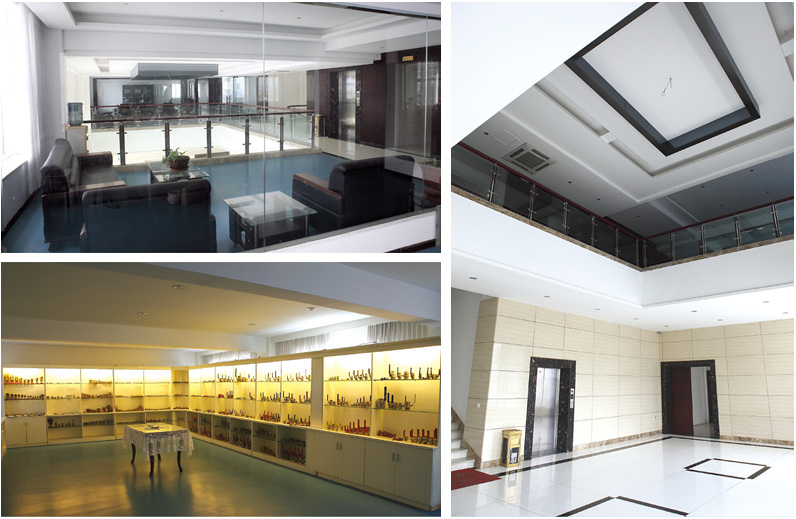
Engineered components designed to facilitate zone distribution, high-pressure bypass management, and thermal mixing in premium hydronic systems.
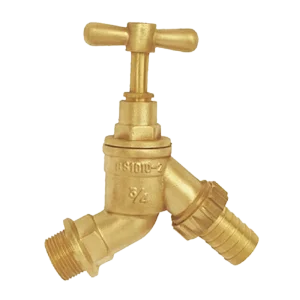
Equipped with outdoor freeze protection and high-grade corrosion-resistant plating for long service lives.
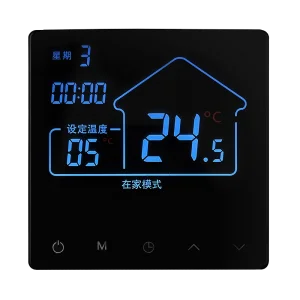
Designed to connect radiator flow controls directly with modern building automation systems.
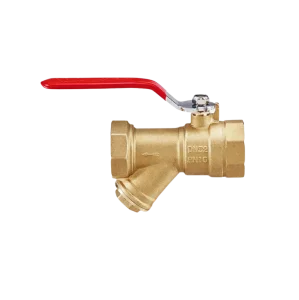
Robust industrial hydronic valves built for commercial multi-zone building renovations.
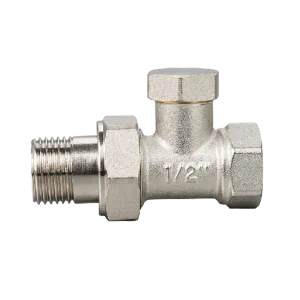
Nickel-plated brass radiator valves offering reliable flow regulation for historic Boston apartments.
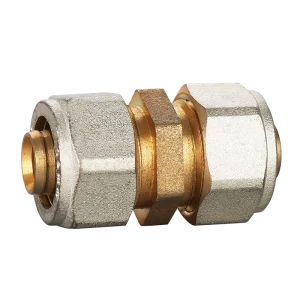
Equal socket brass connectors engineered for high-pressure multi-layer pipe connections.
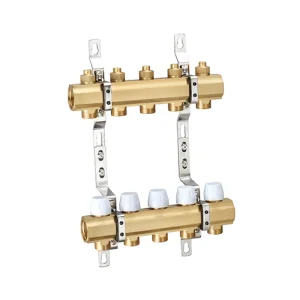
Engineered to balance flow velocities across multi-zoned hydronic heating layouts.
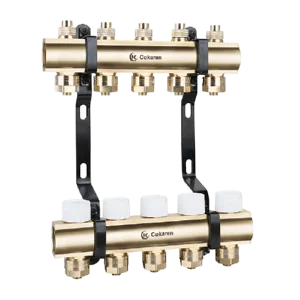
Offers modular configurations from 2 to 10 ways for commercial floor heating zones.
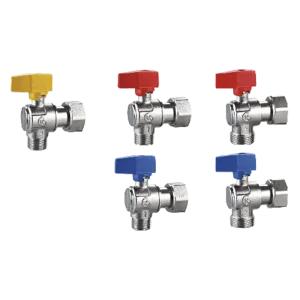
Heavy-duty boiler service valves with high-visibility handles for intuitive gas and water line control.
In Boston, plumbing projects must comply with the Massachusetts State Plumbing Code (248 CMR). These guidelines mandate that all components installed in potable water systems must be lead-free, conforming to the NSF/ANSI 61 and NSF/ANSI 372 testing standards. This is designed to prevent lead leaching in municipal lines. Backflow preventers must be tested annually, and industrial water feeds require reduced pressure zone (RPZ) backflow assemblies to protect the main utility lines.
Imported brass check valves must utilize materials that mitigate dezincification—a selective leaching process where zinc is removed from brass alloys in corrosive water conditions. Using Dezincification Resistant (DZR) brass ensures that the structural integrity of the valve body and mechanical components is preserved over decades of continuous exposure. Additionally, designers must calculate dynamic pressure drop curves to avoid head loss and maintain energy-efficient pumping speeds.
To assist fluid engineers and B2B procurement professionals, the following table details the mechanical parameters of our standard valve and manifold series:
| Component Group | Material Standard | Working Pressure (PN) | Temperature Threshold | Compliance Standards |
|---|---|---|---|---|
| PEX Brass Fittings | CW617N / CW602N (DZR) | PN16 (232 PSI) | -20°C to 120°C | ISO 9001:2015, CE |
| Boiler Service Ball Valves | HPb57-3 / Lead-Free Brass | PN25 (362 PSI) | -10°C to 110°C | ISO 14001:2015 |
| Spring Check Valves | CW617N Brass, NBR/EPDM | PN16 (232 PSI) | -20°C to 100°C | ISO 45001:2018 |
| HVAC Manifold Systems | Nickel-Plated HPb59-1 Brass | PN10 (145 PSI) | -10°C to 95°C | CE Approved |
Our quality control program is backed by international certifications, including ISO 9001:2015 (Quality Management Systems), ISO 14001:2015 (Environmental Management Systems), and ISO 45001:2018 (Occupational Health and Safety Management Systems). Guided by our quality philosophy—"fine work, no leakage"—every valve undergoes rigorous hydrostatic testing to guarantee zero seal bypass, protecting both clean water supplies and mechanical infrastructure.
Expert analysis addressing critical questions regarding plumbing codes, installation challenges, and material standards.