 Yongda
Yongda
Yongda
Discover our engineered solutions optimized for European heating networks, compliant with Italian efficiency standards.
The Italian heating, ventilation, and air conditioning (HVAC) market is undergoing a profound structural transition. Driven by strict European Union decarbonization directives (such as the EPBD recast) and national initiatives like the Superbonus energy schemes, demand has shifted rapidly from traditional gas-condensing boilers to high-efficiency air-to-water heat pumps, hybrid configurations, and sophisticated district heating integrations. In northern industrial zones—spanning Lombardy, Veneto, and Piedmont—and down to the warmer Mediterranean climates of the south, system architects must balance thermal regulation, high hydraulic efficiency, and long-term mechanical reliability.
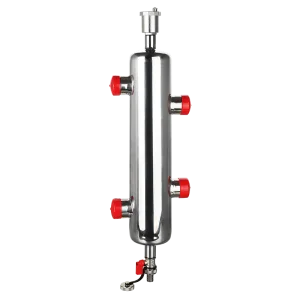
Within this regulatory matrix, Pump Groups (comprising circulating pumps, mixing valves, bypass networks, and temperature controls) serve as the vital mechanical heart of hydronic systems. In Italy, these systems require precise hydraulic decoupling. The integration of devices such as hydraulic water pressure separators and differential pressure bypass valves is critical. Without them, variations in variable-flow circuits (induced by automated thermostatic valves) can trigger cavitation, pump overload, and thermal imbalances. As Italian distributors, OEM specifiers, and engineering contractors source these components, they require products compliant with EN 12165 (for forged brass alloys like CW617N) and strict low-lead regulations suitable for potable water applications.
Italy is renowned for its domestic valve manufacturers and hydraulic research centers located in key clusters like Val Sesia and Brescia. However, the sheer volume of global real estate retrofits and utility upgrades requires an agile, international supply chain. Integrating high-volume, precision manufacturing from Chinese production centers like Yuhuan with Italian engineering design standards creates a competitive edge. This synergy balances cost-effectiveness with high performance, helping distributors secure market share in a highly competitive European landscape.
Proven capability in fluid control engineering, backing the global distribution network of Cokaren and Yuhuan Yongda.
Founded in 1996, Yuhuan Yongda Fluid Control Co., Ltd. (formerly Yuhuan Yongda Plumbing Co., Ltd.) has positioned itself at the vanguard of the global OEM/ODM plumbing and heating component supply chain. Nestled within Yuhuan, Zhejiang—widely recognized as the "valve capital of China"—the company has cultivated a world-class manufacturing complex spanning more than 45,000 square meters, with an operational facility footprint reaching 80,000 square meters.
To supply strict markets like Italy, Germany, and North America, technical capabilities must go beyond basic casting. Yuhuan Yongda operates more than 600 sets of specialized machining, forging, and testing apparatus, including 80+ high-precision automated machine tools. This hardware array ensures that crucial tolerances on valve seats, threads, and internal seals meet ISO 228-1 and EN standards, minimizing pressure losses and maintaining zero-leakage security.
As Yuhuan Yongda’s premium brand, Cokaren is dedicated to delivering highly refined fluid control accessories. Operating under the brand promise of "keep flowing, keep warming", Cokaren bridges the gap between raw manufacturing power and end-user comfort. Our strategy targets global HVAC integration, developing intelligent, clean, and durable components that harmonize with smart hydronic loops and low-temperature geothermal underfloor networks.
A comprehensive look at our integrated modules designed for hydronic isolation, balancing, and smart zoning control.

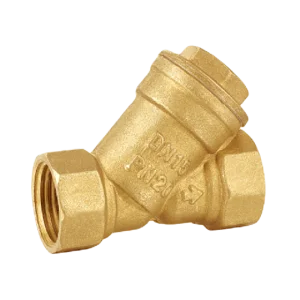
The primary line of defense in domestic plumbing, removing up to 98% of particulate impurities and sediment from pipe flows.

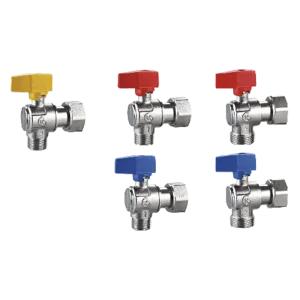
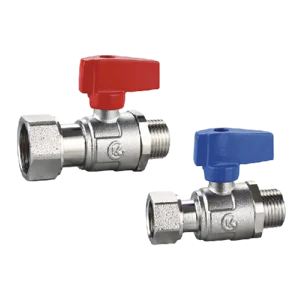
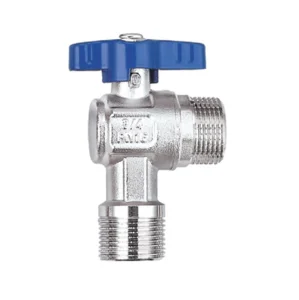
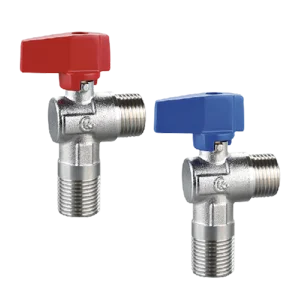
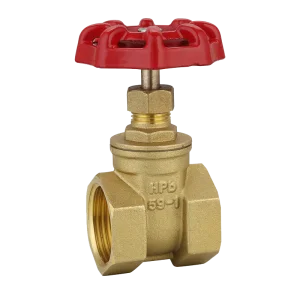
Controls boiler water inlet/outlet feeds using a low-friction spherical spool designed for high temperature stability.

Automatically discharges accumulated air in heat pump and heating loops, preventing air locks and component corrosion.

Mixes boiler supply with low-temperature return lines to prevent thermal shock and maintain stable temperatures.

Monitors room ambient dynamics and controls underfloor manifolds to reduce system energy consumption.

Distributes water flow to multiple zones and coordinates with blending valves to optimize hydronic balance.
Italian HVAC architecture varies significantly by region. In northern cities like Milan and Turin, cold winters demand continuous underfloor heating. These systems require brass manifolds coupled with variable-speed mixing units. Precise temperature mixing prevents micro-fracturing in floor screeds and limits heat loss.
In southern and coastal regions, such as Naples, Palermo, and Bari, plumbing and heating systems must withstand saline humidity and mineral-heavy water. Using standard brass in these environments can lead to dezincification (DZR). Components like our Y-Strainers and boiler connection valves are made from premium-forged alloys to resist corrosion and prevent scale buildup.
For European distributors and industrial procurers, supplier reliability, material certifications, and logistics are critical. Yuhuan Yongda streamlines sourcing with certifications like ISO 9001:2015, ISO 14001:2015, and ISO 45001:2018. This ensures compliance with European environmental and workplace safety mandates.
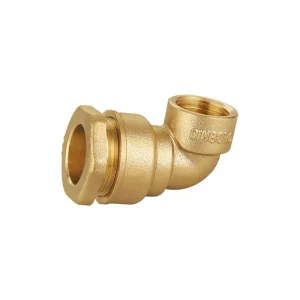
Explore our secondary line of fittings, adapters, and valves configured for residential, agricultural, and commercial distribution pipelines.
Find answers to common technical, material, and logistics queries concerning importing fluid control systems to Italy and wider European markets.