 Yongda
Yongda
Yongda
Premium flow isolation solutions customized to handle pressure regulations in Milan's historical building renovations and modern district HVAC upgrades.
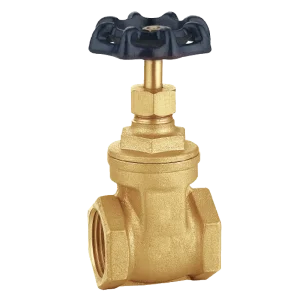
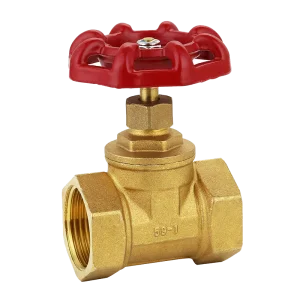
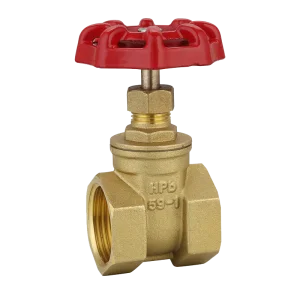
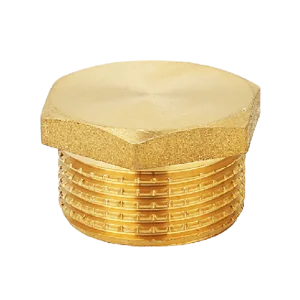
Milan, representing the core economic engine of the Lombardy region and Italy at large, is characterized by a sophisticated industrial infrastructure. As the city spearheads sustainable transition programs under the Italian national recovery framework (PNRR) and regional energy decrees like d.g.r. 7095/2017, there has been a drastic shift toward carbon-neutral heating, modern district cooling, and smart hydronic setups. This regulatory upgrade directly demands industrial valves that conform strictly to European standards (specifically EN and ISO classifications).
For stop valves, globe valves, and distribution manifolds, the Milanese market enforces rigorous parameters regarding dezincification resistance (DZR), hydraulic pressure ratings (PN16 to PN25), and thread precision. The historic architecture of central Milan demands small-footprint, highly reliable valves for restoration layouts where old copper and iron piping are integrated with high-efficiency multi-layer PEX-AL-PEX tubing. Meanwhile, newer financial centers in the city require high-performance balancing systems for vertical HVAC infrastructure.
Providing global procurement officers and local Milanese distributors with uncompromised engineering and scaling advantages.
Worldwide, the demand for brass valves and copper-based alloys is increasing. Factors driving this shift include stricter safety regulations for drinking water systems and the growth of heat pump and hydronic heating technologies. Traditional plumbing components are being redesigned to use lead-free brass alloys, such as CW617N or HPb59-1, to comply with both the EPA regulations in North America and European REACH/RoHS compliance protocols.
Industrial installations are moving away from manual isolation toward motorized and sensor-integrated smart systems. An ordinary stop valve is now a key point for monitoring flow rate, system temperature, and hydraulic stability. Exporters must ensure their production lines run with extreme accuracy to meet global standards like ISO 9001-2015. Every valve component must be constructed to handle dynamic pressures and prevent cavitation and calcification in hard-water systems.
Yuhuan, located in Zhejiang Province, is known globally as the "Valve Capital of China." This specialized industrial cluster provides a complete and efficient supply chain. At Yuhuan Yongda Fluid Control Co., Ltd., we combine this local supply chain network with a 45,000-square-meter facility (actual usable area reaches 80,000 square meters) to deliver high-precision valve components for demanding markets like Milan.
Our facility features over 600 sets of advanced manufacturing and inspection equipment, including 80+ specialized CNC machine tools. This helps us ensure dimensions match European standards and tolerances are tightly controlled. By integrating hot forging, precise machining, surface polishing, and automated assembly in-house, we achieve excellent production efficiency. This structure allows us to offer competitive pricing while maintaining the quality standards required by international buyers.

We process raw brass materials using automated forging presses to prevent interior porosity and micro-cracking. Every brass formulation is checked using spectrometer analysis to ensure it meets CW617N and lead-safe standards. Our manufacturing process includes stress-relief annealing, which prevents stress corrosion cracking under long-term thermal pressure.
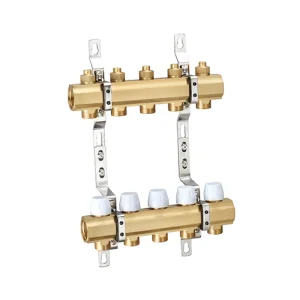
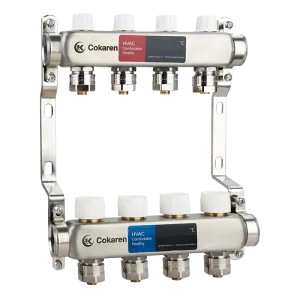
Premium control and distribution components configured to support high-efficiency underfloor and radiant HVAC installations.
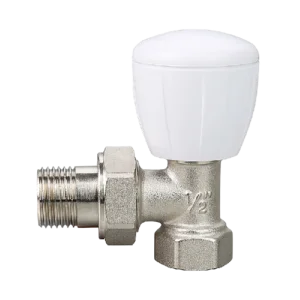
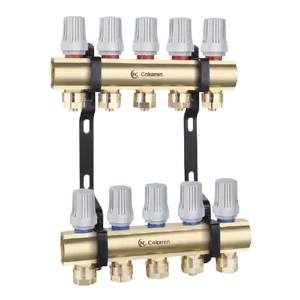
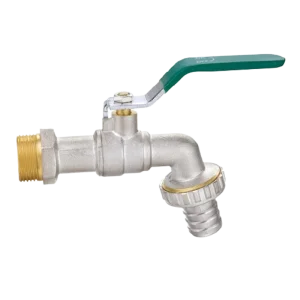
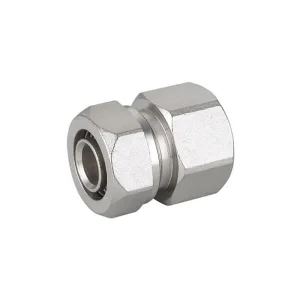
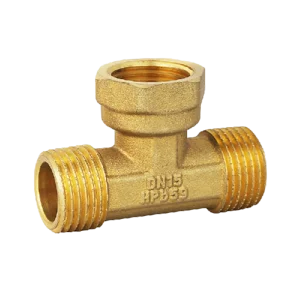
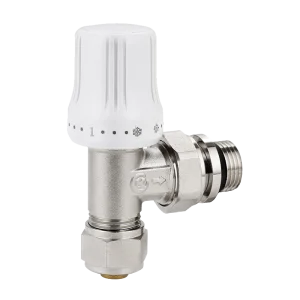
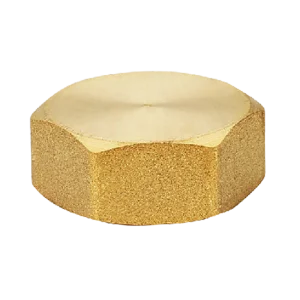
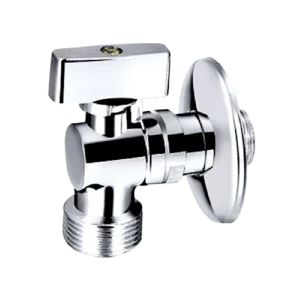
Understanding local installation requirements helps ensure long-term reliability. In Milan, our products are engineered for several key system configurations:
Using our specialized production equipment, we supply components that integrate cleanly with European hydronic standards. This makes installation and servicing straightforward for local technicians.
We approach quality control systematically. Every production batch at our factory is tested at multiple points. Our manufacturing processes are certified to ISO 9001-2015 for quality management, ISO 14001-2015 for environmental management, and ISO 45001-2018 for occupational health and safety.
We use automated testing benches to check for leaks using air pressure. Valves are pressure-tested underwater to verify that seals are reliable. For HVAC manifolds, we run hydrostatic pressure tests to ensure they will perform reliably in high-rise buildings. This careful testing process helps minimize field failures and installation problems for our clients.
Our brass alloys meet European drinking water standards, containing low lead and impurities to maintain water quality. The CE certifications on our temperature-controlled manifolds and thermostatic valves show compliance with EU directives. We work to support the transition toward energy-efficient, reliable building systems across Europe.

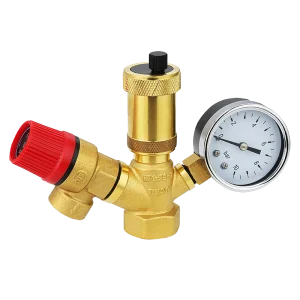
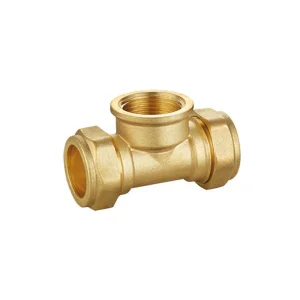
Heavy-duty manifold blocks and safety valve assemblies engineered to manage pressure regulation in domestic and industrial boiler lines.
The fluid control market is changing as environmental regulations and smart building demands grow. We track and design for several key industry trends:
Through our Cokaren brand—guided by the promise "keep flowing, keep warming"—we focus on developing clean, efficient, and reliable water system components for modern residential and commercial buildings.
For procurement managers supply chain security, reliable lead times, and consistent product quality are essential. Below are the key practices we use to meet these requirements:
Technical answers to common questions about our manufacturing processes and standard specifications for the European market.
A1: We primarily use CW617N brass (EN 12165 compliant) and HPb59-1 for our European shipments. For potable water installations where dezincification is a concern, we manufacture using DZR brass (CW602N) to ensure long-term durability and safety, complying with European drinking water directives.
A2: Our quality policy is "Fine work, no leakage." We enforce a 100% pneumatic testing protocol. Every stop valve and manifold assembly is subjected to air pressure testing underwater before packaging. This is followed by random hydrostatic tests on every production batch to verify performance under high-pressure conditions.
A3: Yes. Our underfloor radiant heating manifolds, thermostatic valves, and safety equipment are CE certified. They comply with all relevant European pressure equipment directives (PED) and energy efficiency standards.
A4: For standard OEM requests with custom tooling or branding, our lead time typically ranges from 30 to 45 days. This timeline depends on the design complexity and batch size. We manage all tooling design, die casting, precision machining, and testing in-house to maintain reliable delivery schedules.
A5: We protect all external threads with fitted plastic caps. Products are packed in reinforced, moisture-resistant boxes and secured on pallets to prevent movement and damage during shipping.