 Yongda
Yongda
Yongda
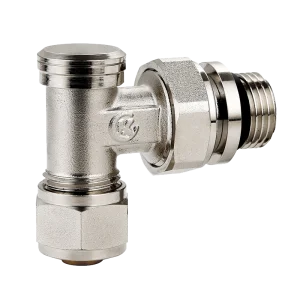
High-performance venting, distribution, and zoning valves optimized for German district heating, HVAC standards, and custom residential plumbing infrastructure.
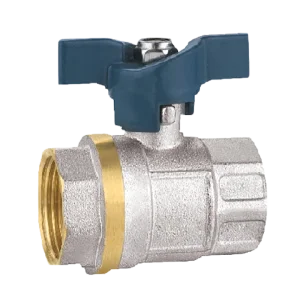
As Germany’s largest seaport city and a leading industrial hub in Northern Europe, the Metropolitan Region of Hamburg is actively redesigning its energy landscape. Under the strict requirements of the German Building Energy Act (GEG - Gebäudeenergiegesetz) and the city's aggressive climate initiatives, the optimization of district heating (Fernwärme) networks, industrial cooling systems, and local residential properties is of critical importance. In closed hydronic HVAC loops, dissolved gasses, microbubbles, and air pockets act as high thermal insulators, drastically reducing heat transfer efficiency by up to 15% and causing destructive cavitation in circulation pumps.
Our robust venting valve technologies and brass distribution systems provide the essential engineering needed to keep Hamburg's industrial district heating networks running at maximum efficiency. From high-pressure commercial air separators installed in the industrial zones of Billbrook and Harburg, to delicate temperature-controlled manifold systems in modern HafenCity residential developments, we supply Hamburg with the precision fluid control hardware required for structural compliance and carbon-reduction targets.

Yuhuan Yongda Fluid Control Co., Ltd. (formerly Yuhuan Yongda Plumbing Co., Ltd.) was established in 1996 in Yuhuan, Zhejiang—the recognized valve capital of China. For nearly three decades, we have dedicated our manufacturing capabilities to the precise design, development, and high-volume production of mid-to-high-grade brass valves, manifolds, and HVAC distribution components.
To better serve premium European markets, we developed our specialized brand, Cokaren. Operating under the brand promise of "Keep flowing, keep warming", Cokaren concentrates on refined aesthetics, superior raw material selection, and extensive safety tolerances. Whether providing standard OEM products or bespoke engineering solutions, we focus on eco-friendly, lead-free and low-lead brass alloys that fulfill Germany's strict Drinking Water Ordinance (TrinkwV) requirements.
Consult Our Engineering TeamOur comprehensive thermal distribution ecosystem ensures optimal hydraulic balance, particulate isolation, and automatic deaeration across commercial and residential structures.
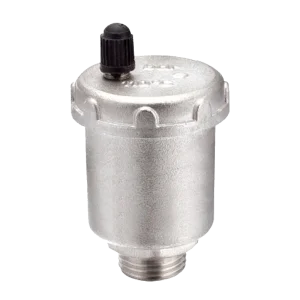
Continuous air accumulation leads to internal metal oxidation and heat transfer degradation. Our automatic microbubble deaerators and venting valves permanently remove entrained air and micro-bubbles from heating circuits without requiring manual operation.
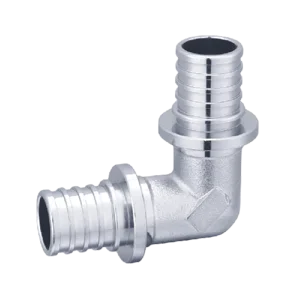
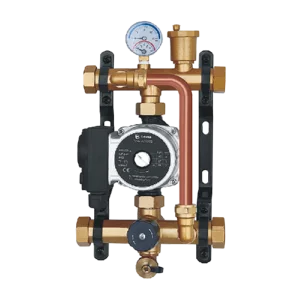
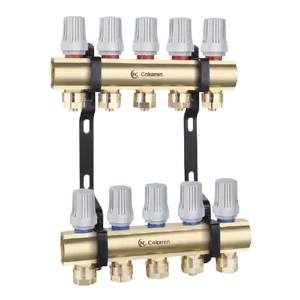
Proper flow distribution is crucial for energy conservation. Our precision brass manifolds distribute localized fluid circuits smoothly, facilitating hydraulic balancing processes (Hydraulischer Abgleich) which are legally mandated in German renovation projects.
By integrating brass Y-strainers and heavy-duty water filters at building entry points, we isolate destructive rust particles and sediment, protecting high-cost heat pumps, solar thermal panels, and smart modulating boilers from fouling.
For procurement directors and MEP (Mechanical, Electrical, Plumbing) consultants in Hamburg, standard parts are not enough. We operate with a core quality policy: "Fine work, no leakage". Every venting valve and manifold assembly is subjected to rigorous pressure, temperature, and leakage tests prior to shipping, maintaining low defect rates across our global operations.
All of our production plants adhere strictly to the triple ISO standards: ISO9001:2015 (Quality Management), ISO14001:2015 (Environmental Stewardship), and ISO45001:2018 (Occupational Health & Safety). Our products hold CE certifications, ensuring compliance with European Pressure Equipment Directives (PED). We offer direct logistics integration and customs handling services for the Hamburg metropolitan area, providing smooth shipping directly to local distribution warehouses or construction sites.

As building automation systems become more sophisticated, the role of mechanical valves is evolving. Our roadmap highlights upcoming innovations designed to meet next-generation requirements.
Developing IoT-enabled venting valves equipped with internal thermal sensors to stream real-time air pocket density metrics directly to Building Management Systems (BMS).
Transitioning our complete European catalog to lead-free brass formulations ahead of proposed regulatory changes, maintaining structural strength and dezincification resistance (DZR).
Optimizing internal chamber fluid dynamics using advanced simulation models, allowing venting valves to isolate gases under higher velocities and fluid pressures.
Detailed insights for mechanical engineers, system designers, and industrial sourcing managers.
Explore our complete range of certified brass hardware, custom fittings, and control systems designed to meet modern residential, commercial, and industrial HVAC specifications.
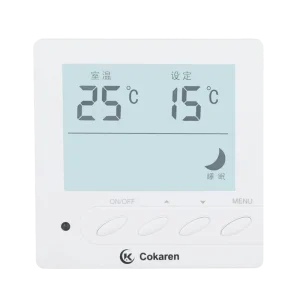
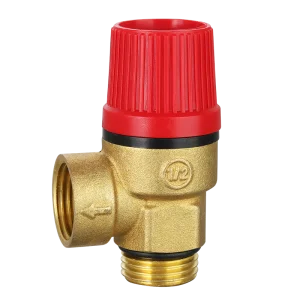
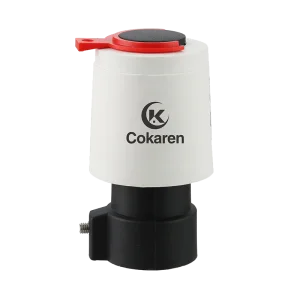
Whether sourcing robust automatic air vents for public municipal energy grids, brass heating manifolds for large-scale apartment structures, or specialized forged valves for maritime facilities, our engineering department provides standard catalog configurations as well as targeted OEM designs to support your project timelines.
Send Inquiry Now