 Yongda
Yongda
Yongda
Explore our premium product line, precision-forged from superior materials to guarantee absolute system compliance, optimal thermal management, and zero leakage.
Analyzing the paradigm shift from mechanical flow components to cloud-integrated, responsive dynamic fluid regulation networks.
In modern hydraulic and thermal networks, automated pressure regulators are no longer isolated mechanical valves. The rapid integration of Industrial IoT (IIoT) and smart hydronic architectures has transformed these tools into critical data-generating edge nodes. As green building certifications like LEED and BREEAM dictate strict parameters for thermal distribution and energy conservation, fluid systems require real-time modulation to avoid hydraulic imbalances, excessive pumping energy usage, and structural micro-leakages.
Currently, the market is undergoing a significant transition toward decentralized dynamic balancing. Historically, static balancing was the industry default. However, static systems cannot adapt to fluctuating demands caused by zone shut-offs or variable speed pumps, resulting in system noises, dynamic pressure spikes, and suboptimal heat exchange. Automated pressure regulators, dynamic balance valves, and smart HVAC integration systems dynamically respond to downstream differential pressures, stabilizing the environment under any partial load condition.
Furthermore, structural sustainability and materials science have influenced hardware manufacturing. Regulators and fittings must be composed of low-lead or dezincification-resistant (DZR) brass alloys, such as CW617N or C37700, to prevent mechanical breakdown and trace metal migration into municipal water matrices. This material integrity ensures long operational lifetimes, high corrosion resistance, and total environmental compliance in major markets like North America and the European Union.
Founded in 1996 and located in Yuhuan, Zhejiang—known globally as the "China Valve Capital"—Yuhuan Yongda Fluid Control Co., Ltd. (formerly Yuhuan Yongda Plumbing Co., Ltd.) has evolved over three decades into a leading force in modern hydronic engineering and flow control design.
Spanning a physical factory footprint of over 45,000 square meters, with an operational usable area reaching 80,000 square meters, our production floors house more than 600 sets of advanced manufacturing and testing apparatuses. This infrastructure includes over 80 sets of precision special-purpose machine tools, CNC machining hubs, automated forging lines, and multi-stage leak detection rigs.
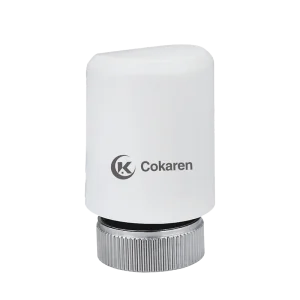
Under our premium brand, Cokaren, we carry out our brand mission: "keep flowing, keep warming". Our design team focuses on perfecting appearance, hydraulic properties, and metallurgical composition to bring reliable domestic and industrial water system products to markets worldwide.

Our operational framework operates under a simple, non-negotiable motto: "Fine work, no leakage." This quality policy is backed by robust international standard compliance. We have built our management structure to achieve certifications in:
This integration of quality control and occupational safety ensures that every brass valve, fitting, or manifold group leaving our factory floor is tested for strength and tightness under pneumatic and hydraulic loads, verifying compliance before export.
Our energy distribution engineering represents a complete approach to dynamic climate control and hydronic balancing. Through integrated control loops, we manage flow paths from heat generation to terminal heating units.
By combining manual filtration, thermostatic regulation, and smart pressure-bypass loops, our configurations reduce operational energy consumption by up to 22% compared to standard configurations.

To establish a highly efficient fluid system, various components must interact without pressure drops or structural degradation. Below, we break down our proprietary system modules and core product designs:
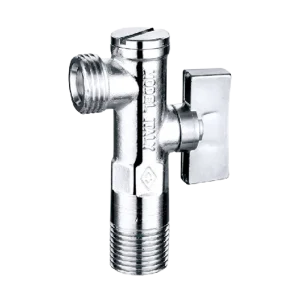
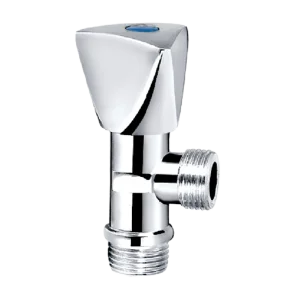
The foundation of any hydraulic longevity strategy is high-performance filtration. The Y9021 Water Filter serves as the first line of defense in domestic water sanitation and commercial closed loops, capable of filtering up to 98% of particulate impurities and pipe scale. Removing these particulates prevents downstream erosion in thermostatic cores and automated pressure regulation mechanisms. This setup is paired with the Boiler Angle Valve Y5001/Y5002, featuring a precision-engineered spherical spool that controls the inflow and outflow of water to prevent fluid hammer and wear during thermal cycles.
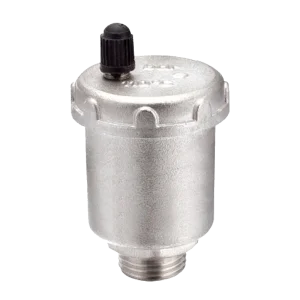
Dissolved gases and microbubbles reduce the thermal capacity of hydronic systems, cause localized noise, and accelerate pipe corrosion. The Y9070 Venting Valve automatically discharges excess air in heating systems and air-source heat pump circuits. Its vertical float design opens when air pockets gather in the top chamber, releasing the gas while maintaining a tight, leak-free liquid seal under dynamic pressure. This eliminates manual bleeding cycles and stabilizes thermal efficiency.
For combined floor heating and high-temperature radiator systems, temperature moderation is necessary to protect subfloor structures. The Y5020 Mixing Shunt mixes high-temperature boiler supply water with cool floor return water to achieve a stable temperature, protecting PEX pipelines from thermal degradation. Controlled by the Y9031 Smart Thermostat and integrated with Y2010/Y6012 HVAC Valves, this setup allows building managers to monitor and manage temperatures, differential bypass pressures, and flow volumes across multiple residential zones.
The Y1001 Manifold splits flow paths throughout residential or commercial rooms. Built from thick brass profiles, it can be customized with mechanical flow meters, balancing valves, and electrothermal actuators. This allows the system to balance flow rates regardless of line lengths, preventing uneven heat distribution across zones.
B2B procurement managers and mechanical engineering firms face a complex landscape of global certifications, ecological demands, and logistical issues. Securing reliable flow-control hardware requires addressing several critical factors:
As the HVAC and plumbing sectors align with smart city initiatives, the next generation of flow control products will incorporate digital sensing capabilities. Yuhuan Yongda's research and development roadmap focuses on several key technological areas:
Review additional components in our catalog, designed to work alongside automated pressure regulation setups for clean, leak-free operation.