 Yongda
Whitepaper: Strategic Analysis of the Global Manual Ball Valve Market & China's Production Advantages
In modern HVAC systems, district energy distribution networks, and municipal water infrastructures, flow control reliability is of paramount importance. The manual ball valve serves as a foundational component, safeguarding system safety, enabling ease of maintenance, and managing dynamic pressure balances. This industrial whitepaper investigates the shifting landscape of global procurement requirements, details the technological upgrades in China's manufacturing sectors, and maps out critical design innovations shaping contemporary flow control networks.
1. Global Commercial & Industrial Landscape of Flow Control
Industrialization, population growth, and high urbanization across North America, Europe, and developing countries have accelerated the demand for high-grade plumbing components. Contemporary projects demand long service lives under varying water pressure and temperature fluctuations. Industrial systems no longer just look for basic mechanical isolation; they look for eco-safe alloys, dezincification-resistant (DZR) materials, and full certification alignment (such as ISO, CE, and RoHS) to ensure safety and system longevity.
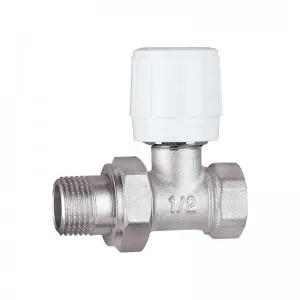
Furthermore, energy conservation initiatives in the European Union and North American HVAC standardizations (such as ASHRAE guidelines) have placed special emphasis on optimizing thermal energy transport. Advanced manual balancing and ball valves are crucial in mitigating energy waste and achieving balanced thermal outputs in underfloor radiant systems and domestic boiler environments.
2. Strategic Shift in Global Procurement Requirements
Corporate procurement departments in multinational plumbing and heating groups are pivoting away from transactional buying models. Modern supply chain managers prioritize partners who provide:
- Material Traceability: Continuous verification of alloy compositions (e.g., CW617N brass, HPb59-1) to meet lead-free drinking water laws and prevent toxic discharge.
- Long-term Structural Reliability: Leak-free guarantees under continuous operations up to PN16 or PN25 pressure ratings.
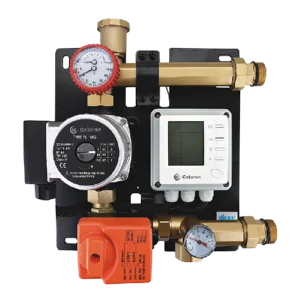
- Integrated System Sourcing: The ability to procure valves, fittings, manifolds, and mixing shunts under a unified quality assurance system.
3. China Industry 4.0: Resilient Valve Supply Chains
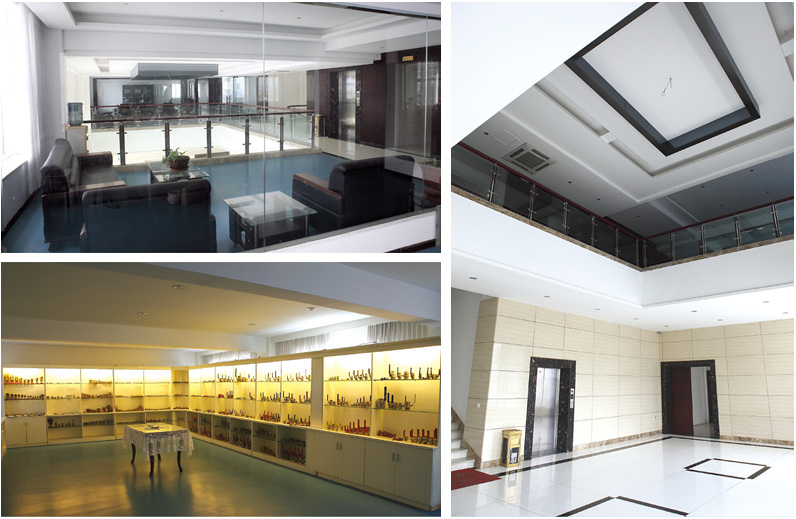
As the "Valve Capital of China," Yuhuan in Zhejiang province has transitioned from basic mechanical manufacturing to a highly integrated, automated cluster. Key factory elements driving this shift include:
- Automation in Hot Forging and CNC Machining: Implementing multi-axis digital transfer systems guarantees dimensional accuracy down to micrometers, minimizing structural defects in brass bodies.
- Advanced Environmental Controls: Closed-loop waste filtration, zero-leak surface treatment practices, and low-carbon production cycles aligned with ISO 14001:2015 specifications.
- Rigorous Testing Protocols: Every batch undergoes pneumatic testing, hydrostatic burst tests, cycle fatigue evaluations, and torque checks. The corporate motto "Fine work, no leakage" underlines this production philosophy.
4. Localized Application Scenarios
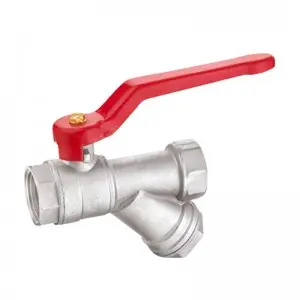
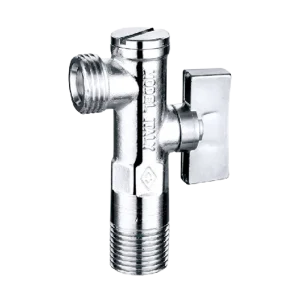
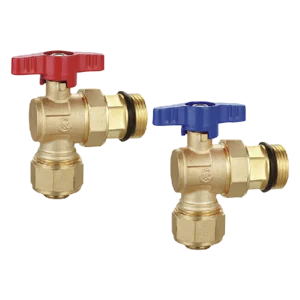
The applications for manual valves are highly specialized and localized. In northern cold climates, mixing valves and manifolds are configured to manage hydronic heating circuits with glycol additives. In commercial boiler setups, angel valves must withstand high steam and high-temperature cold-water replenishment cycles. For drinking water setups, internal filtration features prevent mineral scale and debris accumulation, protecting high-cost downstream electronics and household appliances.