 Yongda
Yongda
Yongda
High-performance flow-control equipment designed to withstand GCC climatic conditions and meet Saudi engineering demands.
The city of Riyadh is witnessing an unprecedented building boom driven by the Saudi Vision 2030 initiative. Massive architectural undertakings, including the King Salman Park, the King Abdullah Financial District (KAFD), and various high-density commercial developments, require cutting-edge mechanical, electrical, and plumbing (MEP) infrastructure. In a climate where summer temperatures routinely exceed 45°C, the role of precise fluid and temperature control becomes paramount.
Domestic hot water and district cooling systems demand robust thermostatic mixing valves (TMVs) to satisfy strict regulatory codes and maintain sanitary system temperatures. Riyadh's hot water systems must keep storage temperatures above 60°C to prevent Legionella pneumophila growth, which in turn necessitates installation of high-precision mixing valves at delivery points to prevent severe scalding by blending the hot water with cold mains supply.
"Compliance with SBC 701 (Saudi Building Plumbing Code) mandates precise water discharge temperatures at fixtures. This dictates the deployment of ASSE 1017 and ASSE 1070 certified thermostatic mixing valves to protect both end-users and building assets."
Additionally, Riyadh's municipal water systems often present elevated levels of dissolved mineral salts and hard water conditions. Traditional brass alloys fail due to dezincification under these circumstances. Our specialized DZR (Dezincification Resistant) and low-lead brass mixing valves are manufactured to resist mineral buildup, outlasting standard materials and reducing long-term maintenance overhead for local MEP contractors.
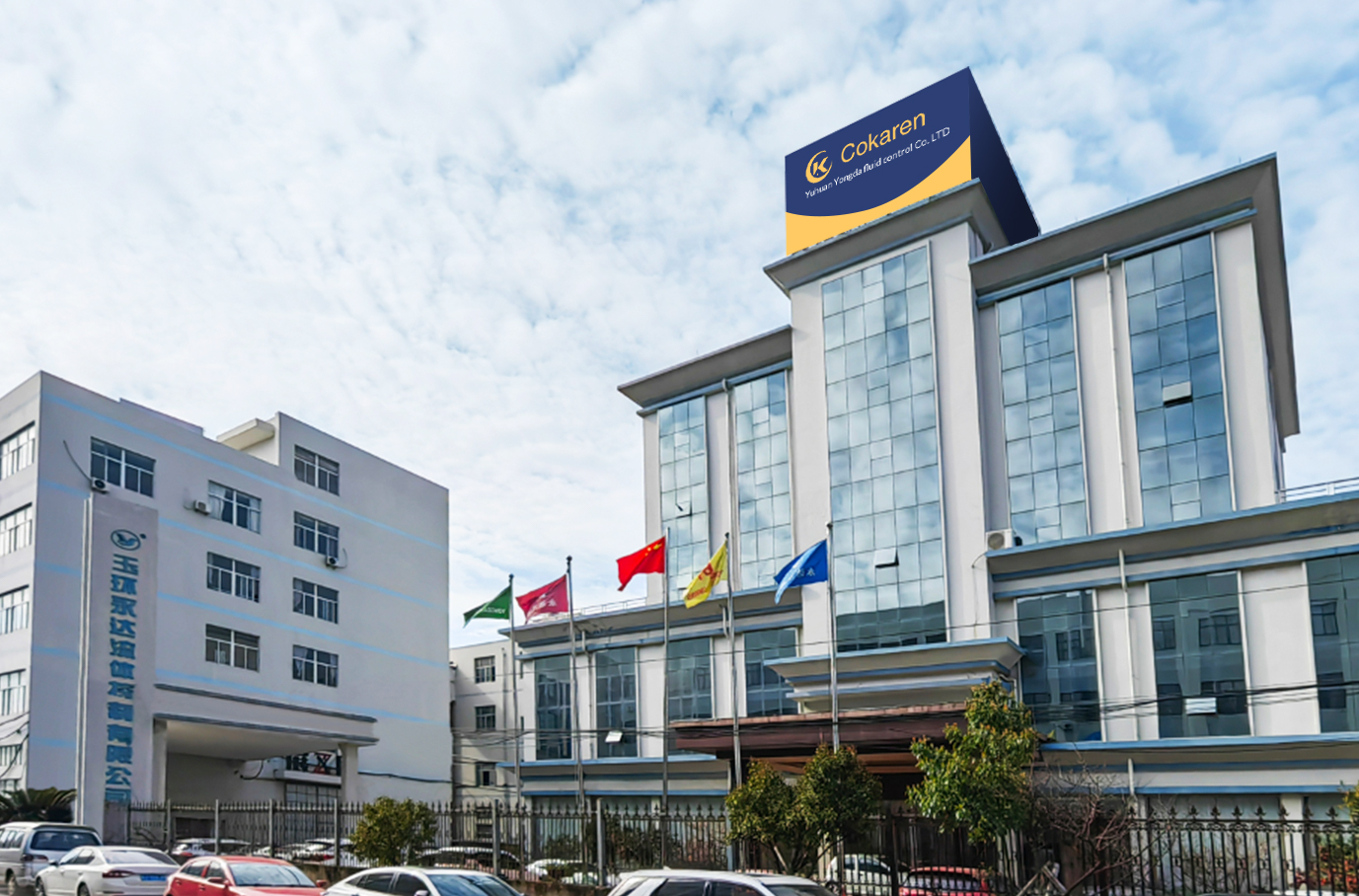
Bridging Western technology certifications with Chinese manufacturing efficiency to power Saudi Arabian construction projects.
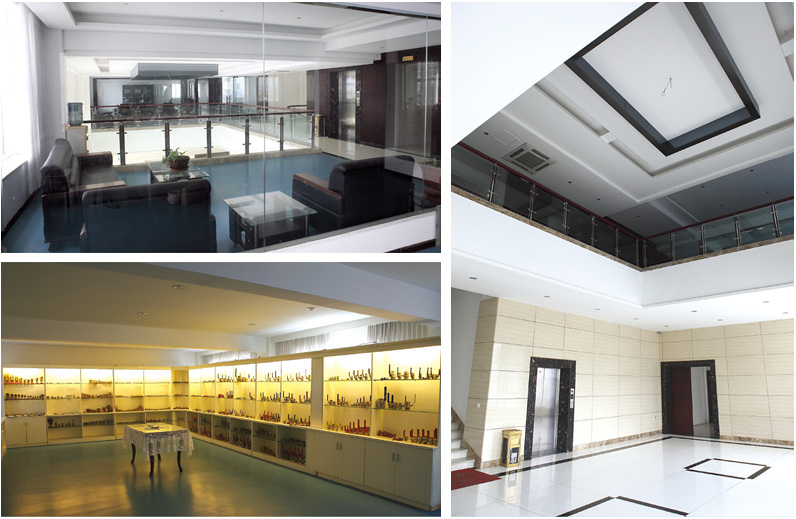
Globally, the demand for thermostatic mixing valves is expanding rapidly due to strict public health codes and green building standards. Yet, domestic manufacturing in Europe or North America is often constrained by high overheads and long lead times. This is where the advanced valve manufacturing clusters of China—specifically in Yuhuan, Zhejiang—provide an invaluable competitive advantage.
Operating out of "China's Valve Capital", Yuhuan Yongda Fluid Control Co., Ltd. integrates decades of forging and CNC machining expertise. By relying on a vertically integrated supply chain, we control quality from raw brass bar extrusions to automated multi-spindle machining, final pneumatic leakage testing, and surface plating. This ensures Riyadh distributors receive valves that meet or exceed equivalent European and American standard test specifications at a optimized pricing structure.
Engineered specifically to solve hot water safety, pressure balancing, and solar thermal integration challenges in the Middle East.
Riyadh relies heavily on rooftop solar thermal water heating. These systems generate water exceeding 80°C. Our mixing valves blend this superheated water down to safe levels before it reaches residential tap points.
Medical centers and hotel facilities in Riyadh are mandated to maintain high water loop temperatures for hygiene, while ensuring absolute safety. TMV3-compliant valves prevent scalding incidents.
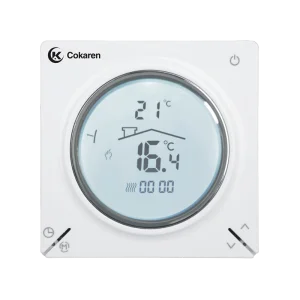
Hydronic underfloor heating and ceiling radiant panels in high-end Riyadh villas require strict temperature control loops. Our brass mixing valves regulate precise flow mixing for reliable HVAC operation.
For MEP engineers, QA/QC managers, and purchasing managers in Saudi Arabia, importing fluid control components involves navigating the SABER platform and ensuring alignment with SASO (Saudi Standards, Metrology and Quality Organization) standards. Selecting a manufacturer with established international certifications streamlines this process.
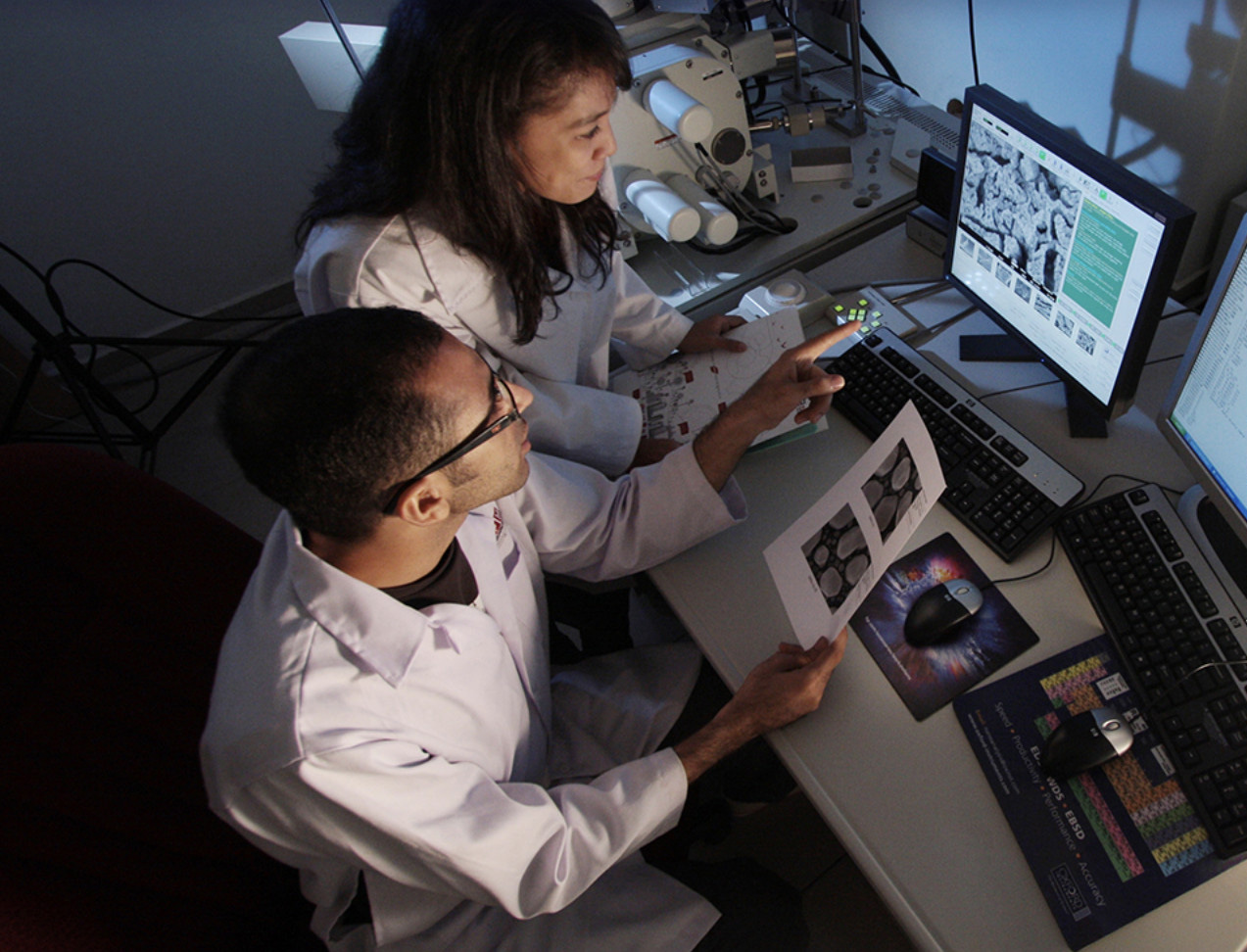
Yuhuan Yongda’s production floor operates under ISO 9001:2015 quality management, ISO 14001:2015 environmental protocols, and ISO 45001:2018 occupational health frameworks. This ensures institutional consistency and traceability. Every batch of copper raw material undergoes spectrum analysis to verify that alloy ratios conform to international standards like CW617N, C37700, or low-lead specifications required for potable drinking water.
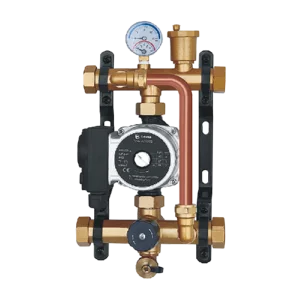
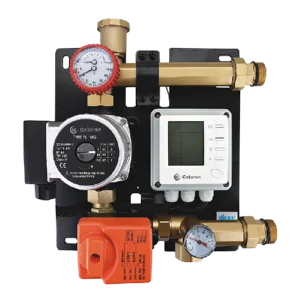
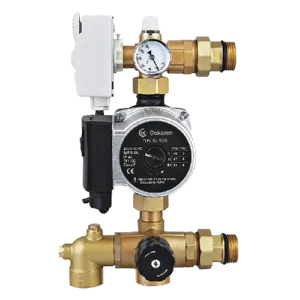
When sourcing mixing valves for Saudi residential zones, look for three main parameters: thermodynamic wax element response time (must react within seconds to cold water pressure failure), dynamic pressure balancing capability, and ease of internal cartridge maintenance without disturbing pipe layouts. Under the Cokaren brand, we design systems targeting "keep flowing, keep warming" to protect critical HVAC connections.
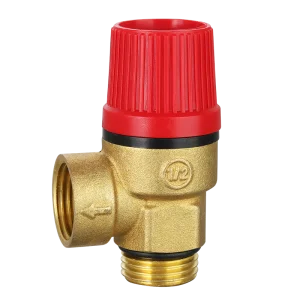
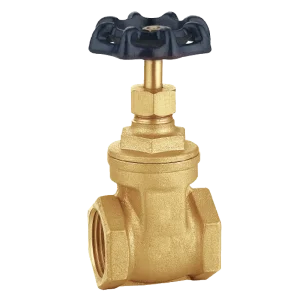
A complete selection of water safety, relief, pressure balancing, and distribution components for Middle Eastern projects.
Answers to common engineering and sourcing questions regarding mixing valve selection for Middle Eastern water infrastructure.
In Saudi Arabia, plumbing installations must align with the Saudi Building Code (SBC 701 - Plumbing Code). TMVs must satisfy standards such as ASSE 1017 (for point-of-source distribution mixing) and ASSE 1070 / BS EN 1111 (for point-of-use anti-scald protection at fixtures). Before importation, products must also be certified via the SASO SABER platform to verify quality and material safety.
Riyadh's groundwater can contain high concentrations of dissolved minerals, which can lead to lime-scale buildup and dezincification in low-grade brass. We address this by utilizing high-grade DZR (Dezincification Resistant) brass alloys and CW617N lead-free brass. The internal cartridges of our valves are also polished to prevent calcium adhesion, ensuring smooth sliding action and thermal sensitivity over years of service.
Due to intense solar exposure in Saudi Arabia, residential solar water heaters regularly generate water temperatures above 80°C. Storing hot water at high temperatures helps prevent bacterial growth, but delivering it directly to plumbing outlets poses an immediate scalding hazard. Installing a dynamic solar thermostatic mixing valve at the tank outlet blends cold water to deliver a safe, regulated 45–50°C stream to taps.
Our Quality Control team implements a multi-stage protocol: 1) Spectral analysis of raw brass material to verify composition; 2) Precision coordinate measuring machine (CMM) inspection of CNC machined parts; 3) 100% pneumatic testing for casting micro-fissures; and 4) Hot/cold dynamic water temperature response tests to verify thermostatic actuator performance before packing.
For standard brass catalog items, our lead time typically ranges from 30 to 45 days. For custom OEM designs requiring engineering adjustments, casting mold adjustments, and CNC reprogramming, the complete development and production cycle takes between 60 to 75 days, depending on approval cycles and volume.
Get project quotes, structural engineering support, and sample valves for your next commercial project in Riyadh or across the GCC.
Send Inquiry Now