 Yongda
Yongda
Yongda
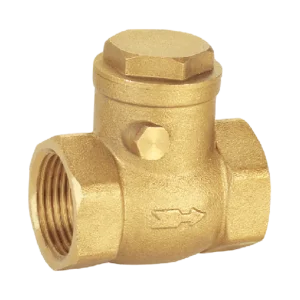
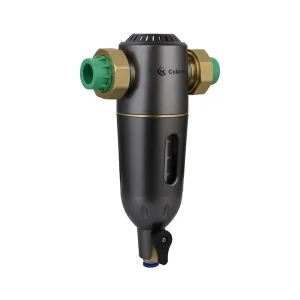
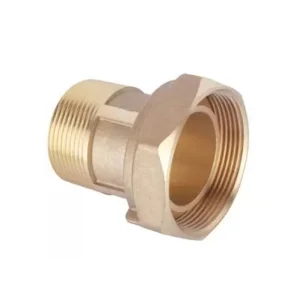
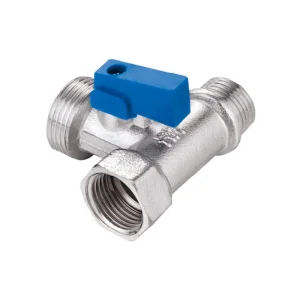
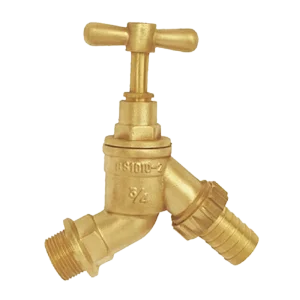
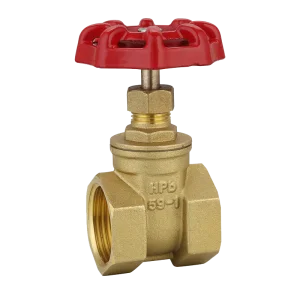
In the rapidly advancing landscape of industrial fluid handling, the demand for high-reliability components compliant with CE Certification is at an all-time high. Pneumatic gate valves play a pivotal role in safety shutdown systems, process loop isolations, and HVAC plant room operations. When combined with mechanical actuators, these components convert clean pneumatic energy into immediate linear force, offering zero-leakage security, long lifespan, and low-maintenance functionality.
European Directive 2014/68/EU (Pressure Equipment Directive) enforces strict protocols on the design, materials, and testing of gate valves. As modern processing complexes shift towards Industry 4.0, integrating CE-certified mechanical components with pneumatic actuators has become a necessity for OEMs and utility contractors alike.
Ensuring full conformity with the EU Pressure Equipment Directive (PED) to prevent fatigue and burst risks in high-stress fluid pipelines.
Precision-fit interfaces engineered for double-acting pneumatic actuators, achieving cycle frequencies over 100,000 runs without seal degradation.
By leveraging superior forged brass compositions, our valves minimize media frictional wear, dropping lifetime operational costs by 30%.
Founded in 1996, Yuhuan Yongda Fluid Control Co., Ltd. (formerly Yuhuan Yongda Plumbing Co., Ltd.) is located in the recognized capital of plumbing valves—Yuhuan, Zhejiang Province. Over the last three decades, the enterprise has established itself as an industry leader focusing on the precise design, advanced development, engineering, and global export of premium brass valves, fittings, and HVAC system parts.
Our products span across three core technological groups: brass valves, precision fittings, and comprehensive HVAC systems. Engineered primarily for the medium to high-grade industrial and commercial segments, our valve products excel in environmental sustainability, eco-friendly metal compositions, and performance consistency under intense physical strain. This focus has earned us trust across North America, the European Union, and associated global markets.
To provide modern commercial solutions, our enterprise recently introduced our dynamic new sub-brand: Cokaren. Dedicated to providing high-performance fluid handling accessories, Cokaren's core promise—"Keep Flowing, Keep Warming"—guides our growth as we develop refined, durable systems for residential comfort and smart building automation.

Our company operates on the core principles of Struggle, Enterprising, Pragmatic, and Innovative values. Our customer-centric approach underpins our quality policy: "Fine work, no leakage." Every valve, whether manual or configured for pneumatic automation, undergoes individual hydrostatic pressure testing before shipment. We strive to harmonize organizational growth with employee well-being, driving consistent innovation in fluid dynamics.
Yuhuan Yongda's quality control systems are backed by recognized management standards. The company has passed ISO9001-2015 (Quality Management System), ISO14001-2015 (Environmental Management System), and ISO45001-2018 (Occupational Health and Safety Management System) certifications. These processes guarantee that every batch of pneumatic gate components meets strict European safety and ecological regulations.
Sustainable building and smart space heating depend on precise energy distribution. Below is our key product lineup, developed to manage flow rate, thermal balance, and system safety across domestic and industrial networks.

The first line of defense in domestic water sanitation, designed to filter out 98% of physical impurities and debris within supply lines.
Controls hot and cold water cycles at the boiler inlet and outlet. Uses an optimized spherical spool to resist mineral scale buildup.
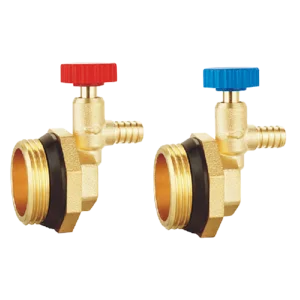
Automatically purges trapped air pockets from water heater systems, preventing air locks and maintaining pump efficiency.
Balances hot and cold water streams to stabilize delivery temperatures, protecting downstream pipe networks from thermal expansion damage.
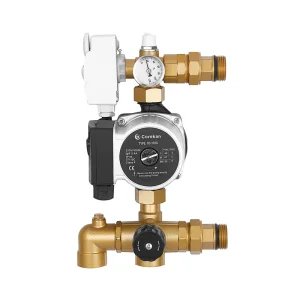
Centralizes management of regional heating zones to optimize indoor temperature stability and energy conservation.
Combines particulate filtering, manual shutoff, zone bypass venting, and inline pressure measurement in a single robust brass body.
Uniformly distributes flow across underfloor heating zones, allowing customized temperature management for individual rooms.
Global engineering consultants and procurement teams face strict safety mandates when sourcing industrial components. Selecting CE Certified Pneumatic Gate Factories involves verifying raw material quality, testing capabilities, and design safety margins.
CE marking on pneumatic valves requires alignment with PED 2014/68/EU guidelines. This directive categorizes products by hazard level based on nominal size (DN), maximum allowable working pressure (PS), and media state. Premium manufacturing facilities subject their casting and forging processes to nondestructive testing, including ultrasonic and dye-penetrant inspections, ensuring zero surface porosity.
Pneumatic actuator performance is directly influenced by the valve’s mechanical resistance. Properly designed gate valves feature low-friction guides and polished stem rods to reduce operating torque. Over-sized actuators waste clean instrument air, while under-sized actuators can lead to incomplete shutoff. Partnering with a manufacturer that provides detailed torque data across temperature ranges ensures robust and reliable automation systems.
In applications involving potable water or sensitive chemicals, lead leaching is a key concern. Premium suppliers utilize dezincification-resistant (DZR) brass alloys such as CW602N or lead-free alternatives like CW724R. These materials resist structural degradation in soft or high-chloride water, maintaining piping integrity for decades.
Standard EN 12165 CW617N brass for general services, and specialized DZR/lead-free options for potable water lines.
EN 12266-1 Rate A zero-leakage testing, utilizing premium elastomeric and fluoropolymer seals.
Polished ISO 5211 direct-mount stems reduce frictional torque, enabling smaller, highly efficient pneumatic actuators.
Rated up to PN25 pressure limits with operational temperature thresholds ranging from -20°C to 120°C.
The integration of electronic systems and fluid power is reshaping the valve manufacturing landscape. Our production roadmap focuses on three primary areas:
Position sensors and pressure transducers feed system metrics directly to central monitoring software, enabling predictive maintenance before failures occur.
Direct metal laser sintering is utilized to produce complex interior pathways, reducing turbulent flow, noise levels, and cavitation damage in throttling loops.
Adopting lead-free brass formulations and low-friction polymer seals reduces the environmental footprint of our products while extending service life.
Common technical queries addressed by our global valve engineering and product support team.
To achieve CE certification under the PED (Pressure Equipment Directive), valves must undergo design validation, chemical material verification, and shell pressure testing. Standards like EN 12266-1 define required hydrostatic tests (minimum 1.5 times the rated working pressure) and pneumatic seat leakage tests to ensure safety and system reliability.
Environmental standards require manufacturers to verify RoHS compliance, limit heavy metals like cadmium and mercury, and control lead content. Yuhuan Yongda's facilities use advanced alloys that comply with both EU and US requirements, including NSF/ANSI 61 and RoHS directives.
Yes, provided the valve features an ISO 5211 mounting pad and a non-rotating stem. A rising stem requires a linear cylinder actuator, while quarter-turn valves (like ball or butterfly valves) require rotary actuators. Using matched components prevents stem binding and reduces seal wear.
DZR (Dezincification Resistant) brass prevents zinc loss in warm or mineral-rich water, which can leave the copper matrix weak and porous. Using DZR alloys extends system lifetime and protects building piping from leakage risks.